Why South Indian Bellies Hold On to Fat, and What a Tummy Tuck Fixes
A famine 150 years ago still shapes South Indian bodies today. Dr. Amrika explains why the post-pregnancy belly stays, and how a tummy tuck fixes it.

In this article · 6 sections
The famines of the late 19th century on the Deccan Plateau favoured people whose bodies stored fat in the belly, arms and thighs. Their descendants, today’s South Indians, still carry that trait, so the belly fat and loose skin left after pregnancy often stay despite the strictest diet and exercise. Genes cannot be changed, but the result can: a tummy tuck (abdominoplasty) with 360 degree liposuction removes the excess fat and skin and repairs the muscle underneath.
The Madras Famine of 1878: A Number to Sit With
Towards the late 19th century, that is to say between 1850 and 1899, a devastating occurrence was observed in Southern India. There were sweeping famines in the Deccan Plateau with both climate based changes in the form of drought and man-made conditions of exported grain in the form of British greed. The worst of this was the 1878 Madras famine, where an estimated 8.2 million people died of starvation. Let’s sit with that number for a minute. 8,200,000 people in present day Karnataka, Tamil Nadu, Kerala, Andhra Pradesh and Telangana starved to death while still producing enough grain to feed the same number of people twice over.
This is not a political commentary. This is a note in human biology to understand why South Indian women of today may have more need for abdominoplasty (tummy tuck) than the rest of the world.
How Famine Shaped South Indian Fat Storage
Human biological adaptation is such that those who carry the strongest traits are the ones who live long enough to pass on their genes, i.e. have babies and have those babies survive. This late famine in the Deccan basin caused selection of men and women who were capable of optimal fat storage to be the ones to survive brutal food shortages. Women especially were important in this terrible algebra of necessity. Women capable of preferentially storing fat in the belly, arms and thighs were likely to live through famine and drought, and go on to have successful pregnancies and offspring with this trait. It was survival, pure and simple.
Fast forward to 150 years later. The remote offspring of those women are today’s ladies and gentlemen. Even in a state where famine is a remote memory and, indeed, not even mentioned in textbooks, the biological markers for preferential fat storage are still strong and present. Look around and see ladies who have regular sized limbs while still having very thick fat deposits in the trunk: the back, breasts and belly. The very fact that they are alive today was because of these traits of fat storage.
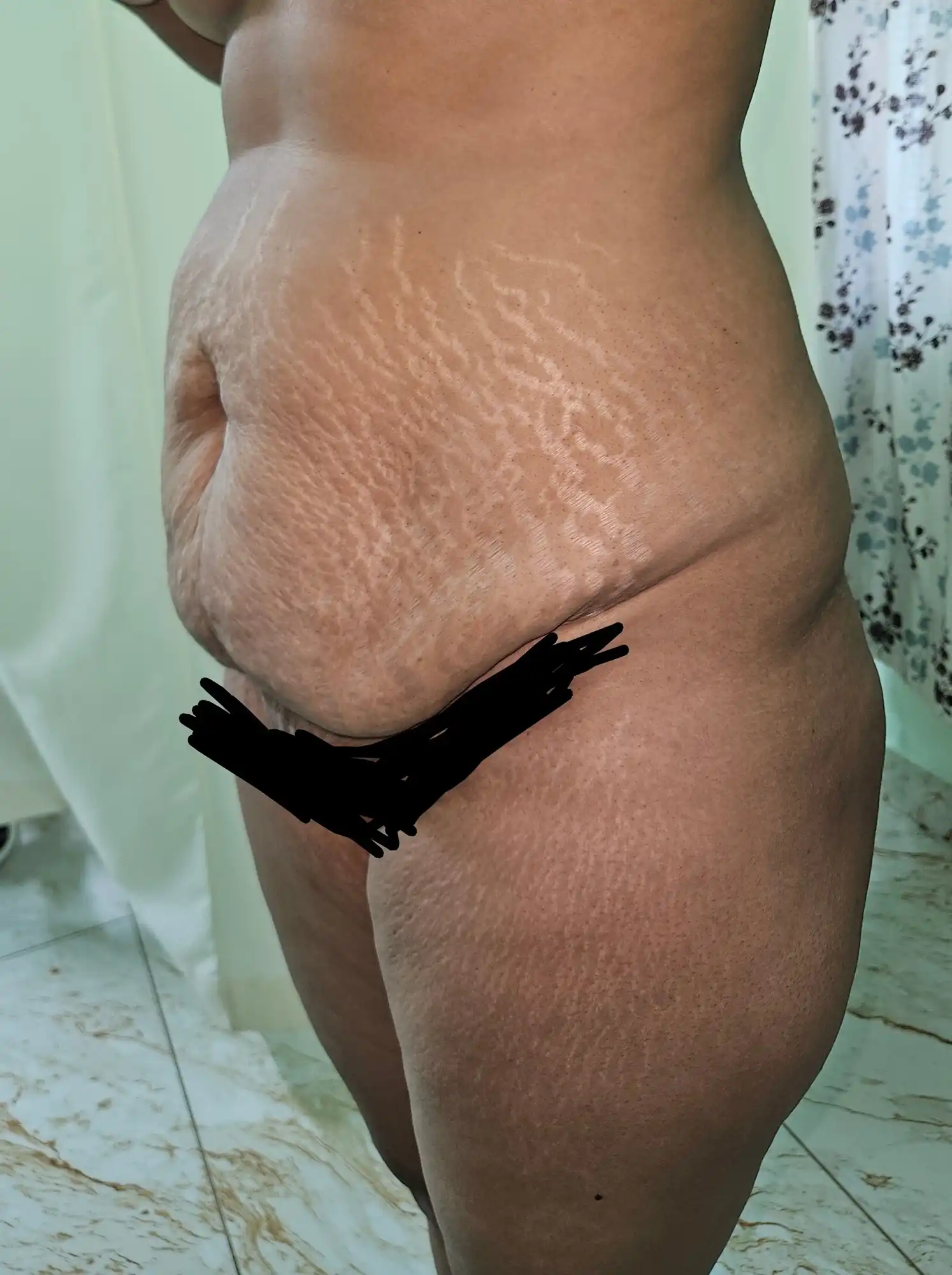
Visceral fat (inner belly fat) and subcutaneous fat (the fat layer below the skin) are among the highest in those of South Indian descent compared to any other population in the world. This worsens during pregnancy as the fat stores explode and cause massive and disproportionate weight gain. After delivery, these fat stores deplete to feed the baby and as a result of dedicated weight loss. And yet, the pendulous belly reminiscent of the pregnant belly and the massive breasts, now deflated, persist.
Why Diet and Exercise Alone Don’t Fix the Belly
There is the belief that reduced weight gain during pregnancy can allow for smaller bellies and less skin sag after delivery. To this I say, short of changing your genetic profile, there is nothing you can do. South Indian bodies are designed to hold on to fat during starvation and the fact of plenty of food does not change this tendency. The body composition never got the memo. And so the excess skin and fat around the belly stays on for years even with the harshest of diet and the most punishing of workout routines.
What Can Be Done to Fix This?
Manipulating genetic information is both dangerous and illegal. We can, however, fix the manifestation. In body contouring arts, this is what we call a 360 degree liposuction and an abdominoplasty (tummy tuck). Here’s the process, as per my guidelines at Dr. Amrika’s Aesthetics on Sarjapura Main Road:
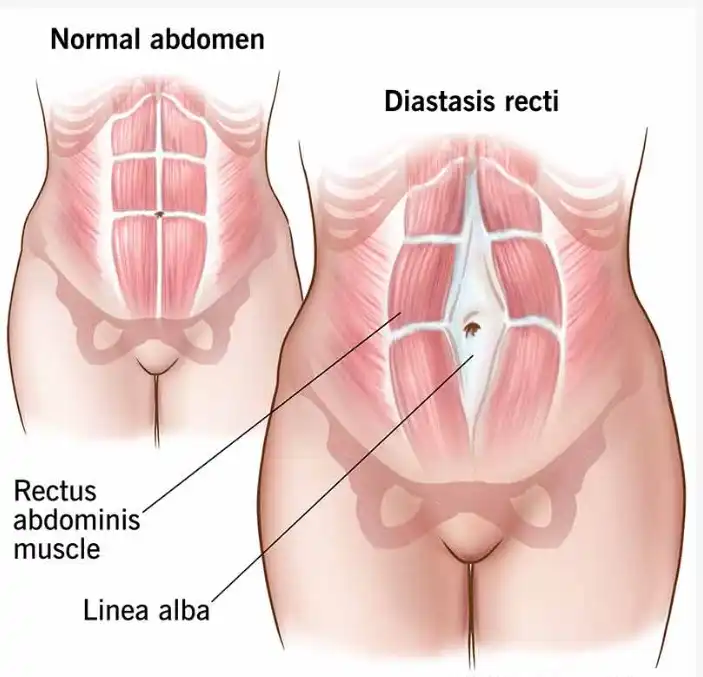
- Detailed health assessment: clinical consultation, physical assessment, blood tests, cardiac tests, and an abdominal CT scan especially to look for diastasis recti and/or herniae.
- PAC: pre-anaesthesia check to assess fitness and suitability for the procedure.
- Surgery: fat is liquefied via VASER technology and gently suctioned out via hidden ports in the back and the front of the trunk. Then muscle repair/hernia repair is performed via an incision similar to a C-section scar and the excess loose skin is removed. The aim is a flat, slightly concave belly.
- Post-surgical care: a downtime of 14 days, followed by light duties for 14 days, during which custom pressure garments are placed and plans to promote quicker healing are undertaken.
- Maintenance: phase-wise escalation of physical activity and dietary advice is provided.
This is the usual course of events. There is a more detailed walk-through of this process on my Tummy Tuck page, so be sure to read that too, along with 10 things I wish every patient knew before a tummy tuck. The results are long-lasting, typically for decades as long as your weight stays stable, and allow better clothing choice and a more confident look for these people who have carried that excess fat and skin through no real fault of their own.
What’s the Takeaway Here?
The mistakes of our past must not affect our present and future. What happened in the Deccan plateau was a horrific and unforgettable chapter in our history. And though we mustn’t forget it, there is also the fact that we needn’t carry the sequelae on our bodies. Getting body contouring is a deeply personal choice. I’ve written this article mainly to disabuse the notion that it is our present habits and lifestyle to primarily blame for a hanging belly. Yes, having a healthy diet, exercise and lifestyle is of the utmost importance. But I would say do not forget the influences of history on our body composition and tendencies.
The famine is something we cannot change, and food security today is better than it ever was in the past for people living in the Deccan plateau. But perhaps we need not let it dictate what we look like today.
Frequently asked questions
Why do South Indian women tend to store fat around the belly?
The famines of the late 19th century on the Deccan Plateau, the worst being the Madras famine of 1876 to 1878, favoured people whose bodies stored fat efficiently in the belly, arms and thighs. They were the ones who survived and had children. Their descendants still carry that tendency, which is why visceral and subcutaneous belly fat is among the highest of any population in people of South Indian descent.
Can diet and exercise get rid of a hanging belly after pregnancy?
A healthy diet and exercise matter, but they often cannot remove the loose skin and the stubborn fat pad left after pregnancy. South Indian bodies are built to hold on to fat, so the hanging belly can stay for years even with strict diets and hard workouts. Removing the excess skin and repairing the muscle needs surgery.
What tests are done before a tummy tuck at Dr. Amrika's Aesthetics?
A clinical consultation and physical assessment, blood tests, cardiac tests and an abdominal CT scan, mainly to look for diastasis recti (separated tummy muscles) or hernias. This is followed by a pre-anaesthesia check (PAC) to confirm fitness for surgery.
How long is recovery after a tummy tuck?
Plan for about 14 days of downtime, followed by about 14 days of light duties. Custom pressure garments are worn during this period, and physical activity is then increased in phases with dietary advice.
Is liposuction done along with the tummy tuck?
Often, yes. Dr. Amrika combines 360 degree VASER liposuction of the back and front of the trunk with an abdominoplasty, which repairs the muscle or hernia and removes the loose skin through an incision similar to a C-section scar.
Results from Dr. Amrika’s practice
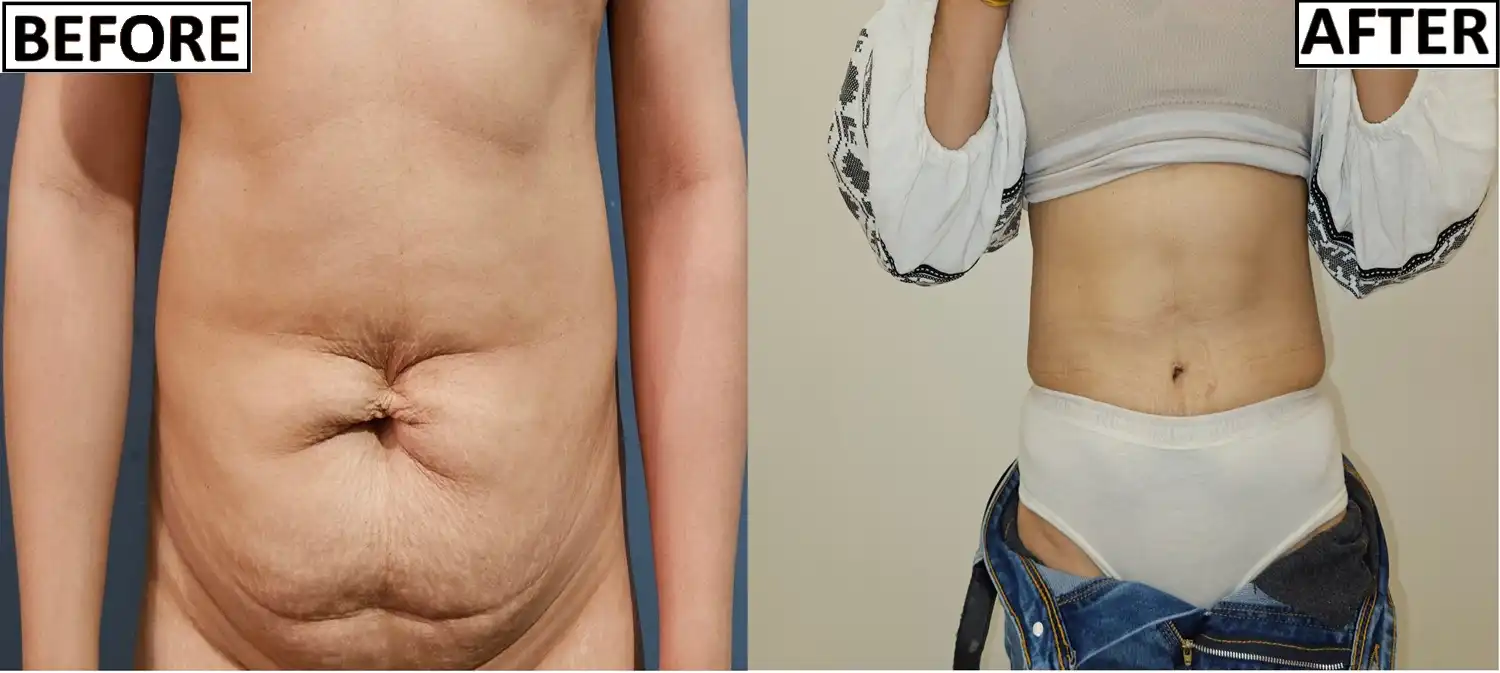
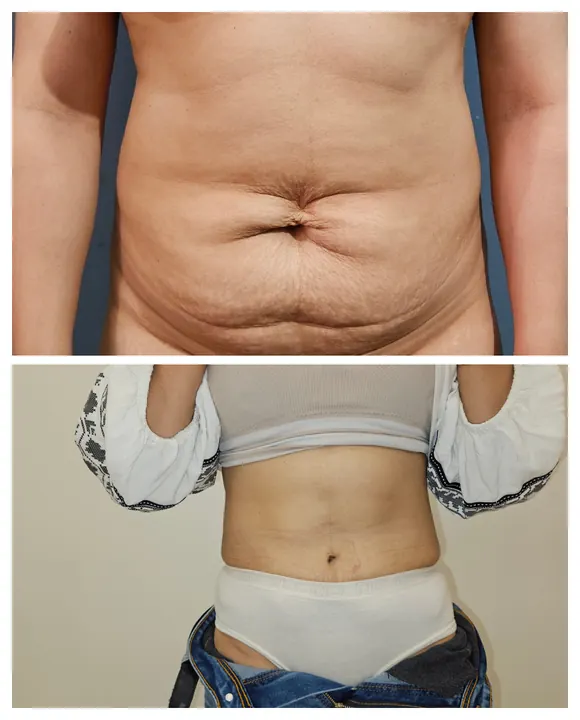 Tummy TuckLoose, folded skin removed and the abdomen flattenedView tummy tuck
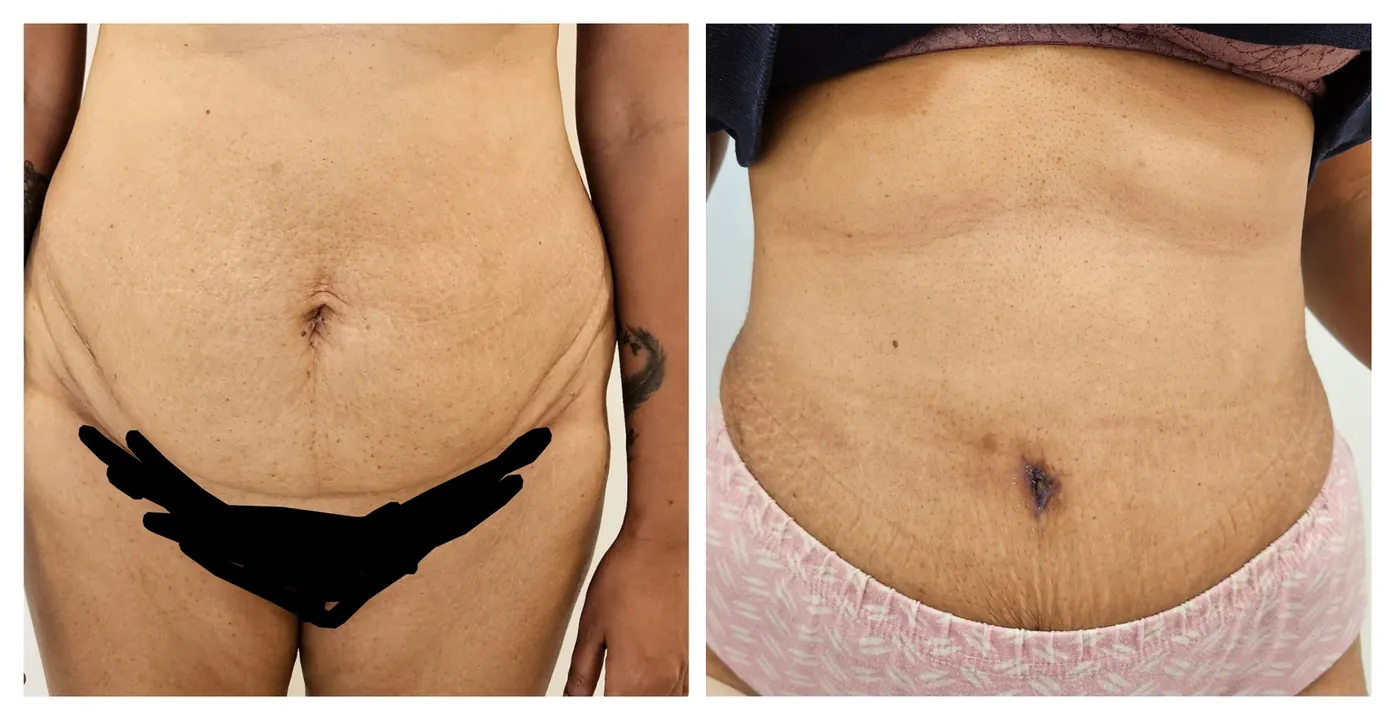 Tummy TuckHanging apron and stretch-marked skin removedView tummy tuck
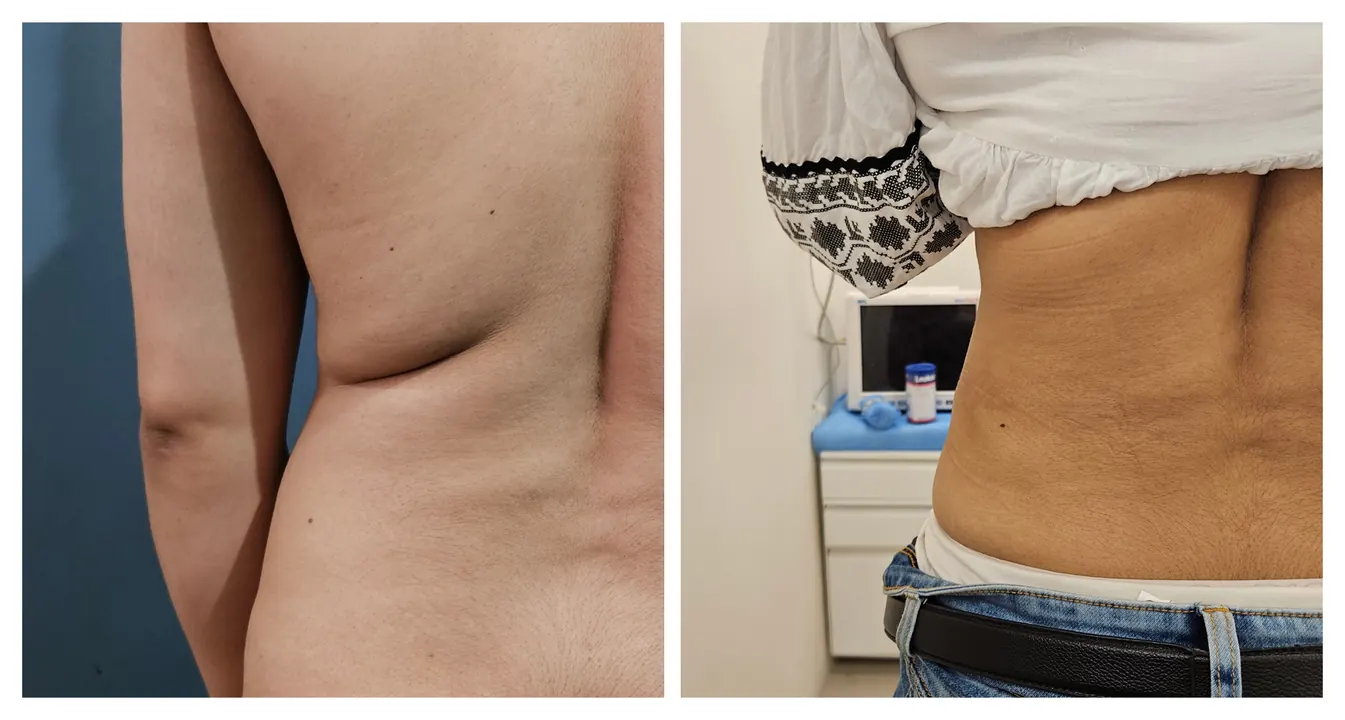 360° LiposuctionFlanks and lower back slimmedView 360° liposuction
Shared with patient consent and masked for privacy. Individual results vary; these images are illustrative, not a guarantee of outcome.
This article is general information from a practising plastic surgeon. It is not a substitute for a personal consultation: every body, and every surgical plan, is different.