Is My Scar Okay? Hypertrophic Scars vs Keloids, Explained
Why skin scars, why some scars rise, and why keloids never quit. Dr. Amrika explains the difference and how she treats keloids step by step.

In this article · 8 sections
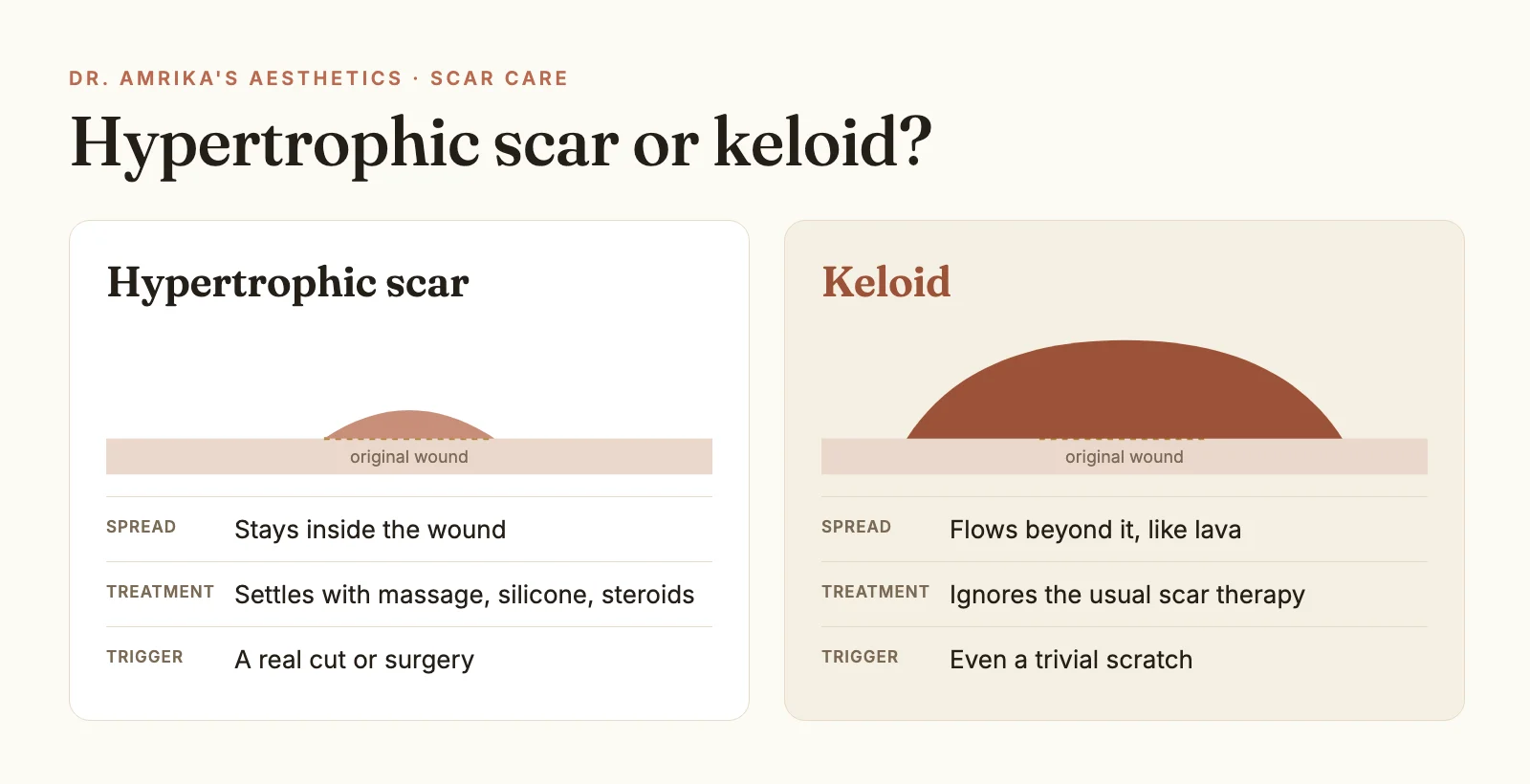
An injury to the top layer of skin (the epidermis) heals without a scar; an injury to the deeper dermis always heals with collagen, which is scar tissue. A hypertrophic scar is a little too much collagen: it is raised and reddish brown or purple, stays within the wound, and settles well with scar massage, silicone tape and steroids. A keloid does not stop: it spreads beyond the wound, ignores the usual scar therapy, and can start from a trivial scratch. Keloids are treated in 6-weekly cycles of assessment and steroid injections, with botulinum toxin or, for the most stubborn cases, surgery with localised radiation. The first step is a consultation for the right opinion.
Scar tissue- the necessary boon of existence and the bane of Plastic Surgery. What is this thing? It is a structure that forms when there is an injury to tissues (skin, liver, muscles, kidneys, brain- yes, everywhere). For the purposes of this article, let’s stick to skin scars.
Why Some Injuries Scar and Others Don’t
A little basic biology first. Skin has 2 layers- the epidermis and the dermis. The epidermis is the top layer of skin, which in turn has about 5 to 8 sublayers all supported beneath with a thin sheet called the basement membrane. This epidermis has true regenerative potential with stem cells sitting on the basement membrane which grow cells and replace these upper layers as and when we shed skin. Humans shed skin cells, this is a fact. We shed skin cells everyday, rather like a dog sheds fur. We cannot help it and this is essential to keep skin healthy. If an injury occurs at the level of the epidermis, then no problem, it heals with no scar. This is because of the aforementioned stem cells that repair it with identical skin cells, not collagen (aka scar tissue).
Now, the dermis, which is the deeper layer, has no stem cells. It heals any and all breaches with formation of collagen. Collagen is a protein that our body produces like a thermocol that patches the broken wall. It’s not identical to the wall, it is much weaker, but can do the same job in a pinch.
What Decides How a Scar Forms
Collagen in scar tissue is the end product, the final form and there are many forms of it. So when there is an injury to the skin’s dermis, special cells secrete collagen to fix the gap and heal it up. This mechanism is governed by genetics, blood supply, local tissue conditions (dirty wound vs clean cuts) and presence of vitamin C.
Hypertrophic Scars: A Little Too Much Collagen
One way that scars stop forming is by a negative feedback loop. If the gap is filled, collagen production stops. Sometimes, the scar is adequate for the job and sometimes it is a little too much collagen for such a small space. This is called a hypertrophic scar. The body still obeys the negative feedback loop and stops the collagen, but with a little excess. A raised scar results and this is treated by Plastic Surgeons with various methods such as-
- Scar massage
- Silicone scar tape
- Topical (applied) steroids
- Injectable steroids, or any combination therein.
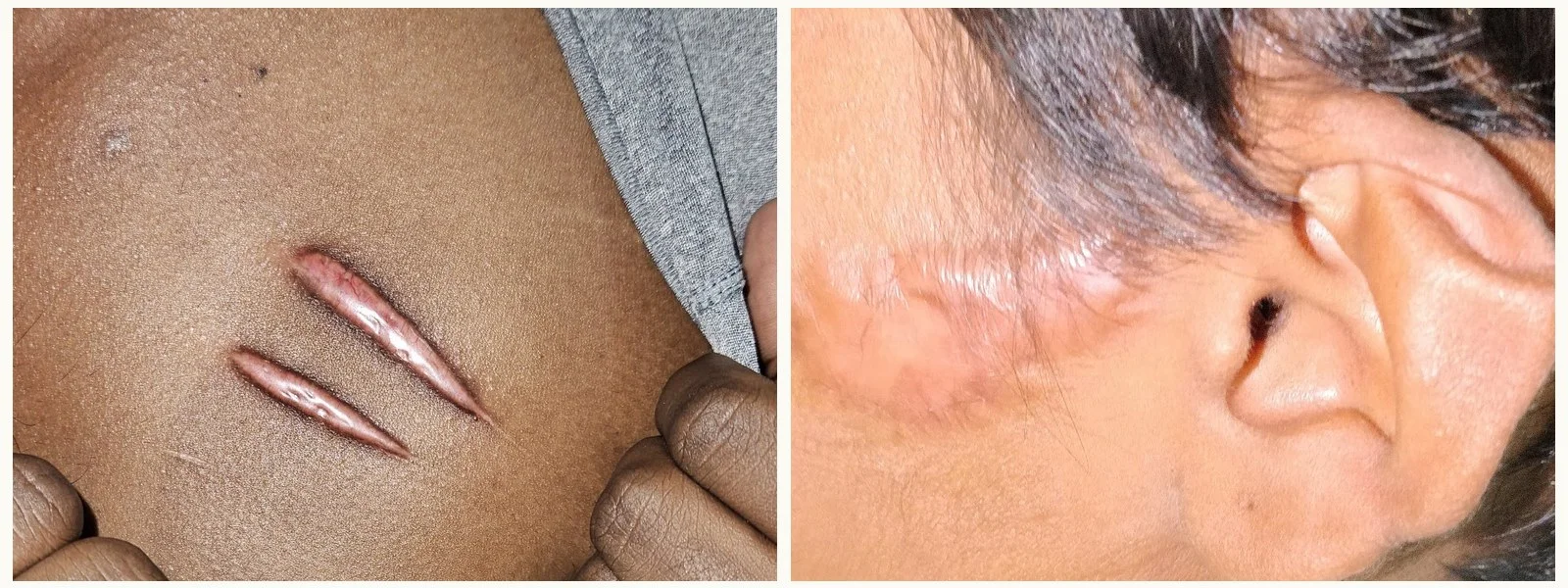
A hypertrophic scar can be found in most patients who undergo routine procedures such as a cyst removal, a liposuction port, or even a laparoscopic surgery port. It looks reddish brown or purple and is a little bit raised off the surface of skin. With the right therapy, this settles really well and doesn’t bother the patient later on.
Keloids: The Scar That Never Quits
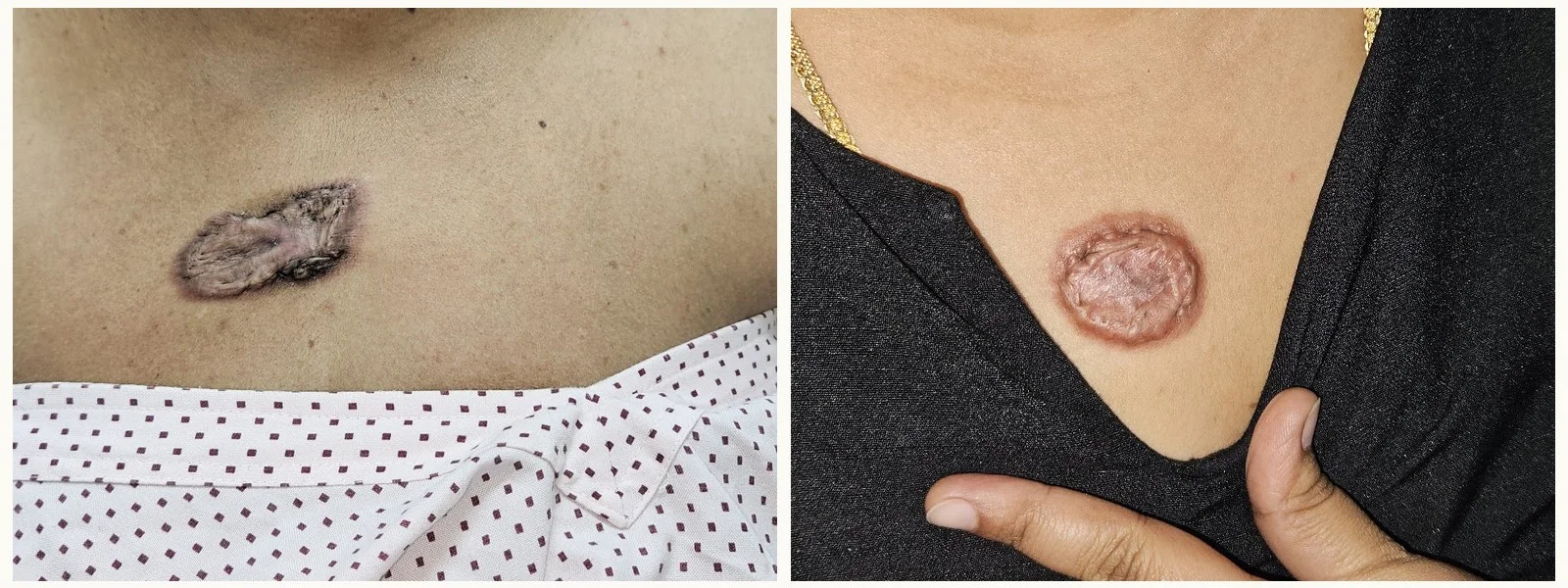
Enter the villain- keloid. Keloids are the absolute worst in that they are not life-threatening but are irritating and they never quit. Remember the negative feedback loop, well the keloid has no time for such things. Keloids operate on a positive feedback loop. If there is a need for collagen to form after an injury, they don’t stop until the wound is healed. They pile on more and more, usually pushing aside normal tissue and heaping on more and more collagen. This is like trying to kill a fly with a shotgun- the fly escapes and you have holes in your wall.
3 Ways to Tell a Keloid From a Hypertrophic Scar
This is actually one of 3 ways to differentiate keloids from hypertrophic scars-
- Hypertrophic scars are limited to the area of injury. Keloids flow over the wound into the surrounding tissue like lava flows from a volcano. It overwhelms the area surrounding the original injury site.
- Hypertrophic scars respond to the measures mentioned earlier. Keloids don’t respond to conventional scar therapy.
- The final awful thing is that keloids don’t even need a real injury. The most trivial scratch can set off a keloid reaction. Patients often do not have a memory of any significant cut or scratch deep enough to draw blood at the site of a keloid formation.
How I Treat Keloids
Keloid therapy is frustrating for both patients and the Surgeon involved. It takes time, patience and a little trial and error to set it right. And after everything, the keloid may get reactivated at a later date which none can predict. That said, I like a little frustration in my practise and therefore treat keloids. Here’s how I do it-
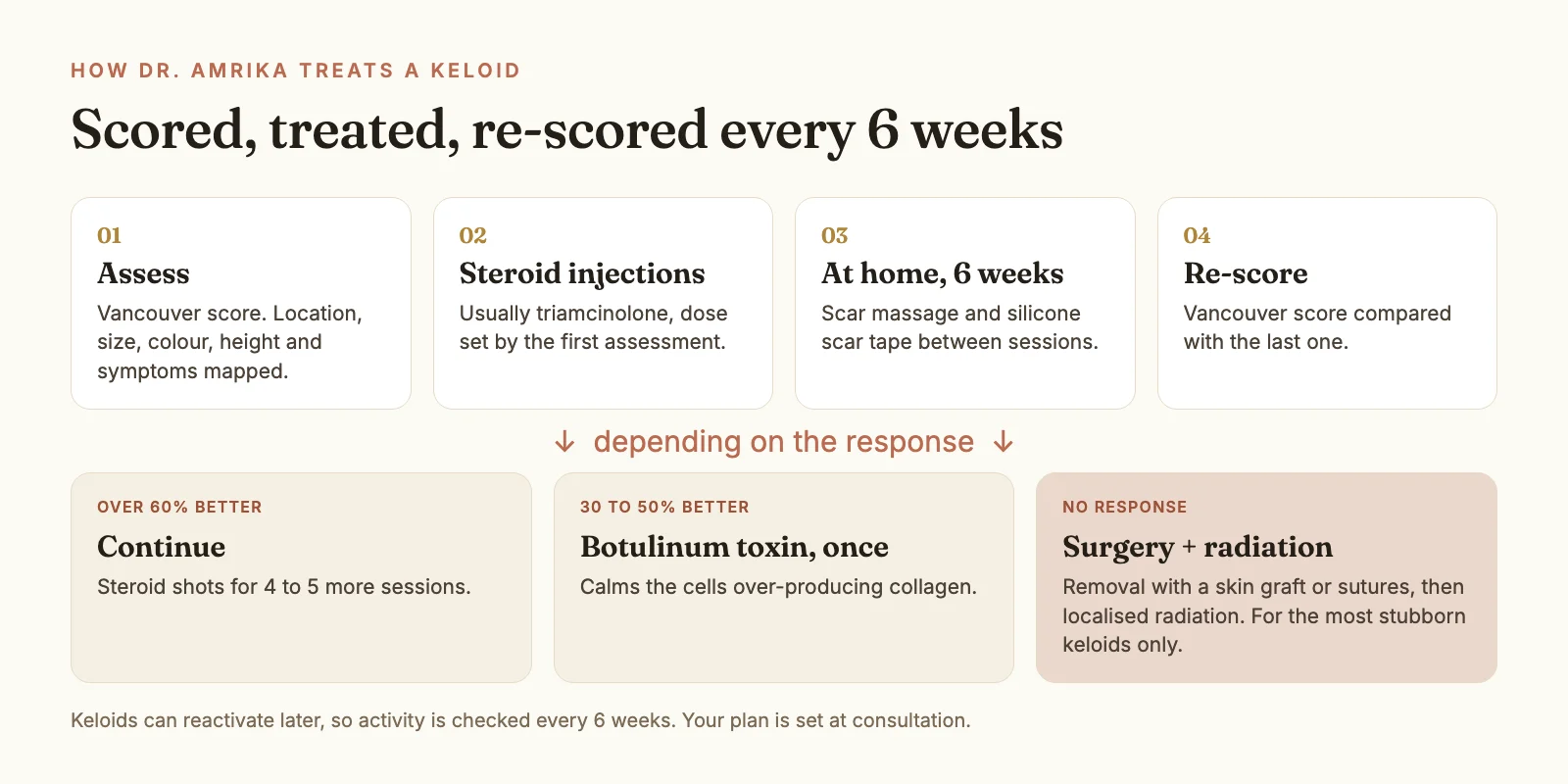
- Start with assessment and a Vancouver score for the keloid, with precise mapping of location, size, colour, height and symptoms.
- Induction therapy with injectable steroids- usually triamcinolone with dose adjustment as per initial assessment.
- In the 6 weeks between sessions, patients are taught scar massage and scar silicone tape usage.
- At 6 weeks, Vancouver score is compared with previous score and if response is excellent i.e. greater than 60% response, steroid shots are continued for 4-5 sessions more.
- If the score is moderate i.e. between 30 and 50%, then BoNT-A (purified botulinum toxin) aka Botox is used once. This causes a paralysing response in the cells involved in over production of collagen.
- Assessments are performed every 6 weeks to monitor activity of the keloid.
- If there is no response to treatments, then the final option is removal of the keloid surgically, either placing a skin graft or closing with sutures, and subjecting the patient to localized radiation. This is the same measure used in treating many forms of cancer and is reserved for the most severe and unrelenting cases. Not my favourite mode of treatment but sometimes the only thing that will work.
The First Step to a Neat Scar
There are many nuances to this therapy. It is not so formulaic as described in this article, though the facts remain the same. The first step to a neat and blended scar is to take the right opinion via a consultation. At Dr. Amrika’s Aesthetics, every scar is treated with what is best for the patient. No shortcuts and no false promises.
Frequently asked questions
What is the difference between a keloid and a hypertrophic scar?
Both are raised scars made of extra collagen. A hypertrophic scar stays within the area of the injury and settles with scar massage, silicone tape and steroids. A keloid grows beyond the wound into the surrounding skin, does not respond to the usual scar therapy, and can start from even a trivial scratch.
Why does one wound leave a scar and another doesn’t?
It depends on how deep the injury goes. The top layer of skin, the epidermis, has stem cells that replace damaged cells with identical skin, so it heals without a scar. The deeper dermis has no stem cells and heals every breach with collagen, which is scar tissue.
Will my raised scar after surgery go down?
A raised, reddish brown or purple scar after a routine procedure such as a cyst removal or a liposuction port is usually a hypertrophic scar. With the right therapy, such as scar massage, silicone scar tape and steroids, it settles really well.
How are keloids treated?
At Dr. Amrika’s Aesthetics, treatment starts with a Vancouver score and steroid injections, with scar massage and silicone tape at home. The keloid is scored again every 6 weeks: a good response continues with steroids, a moderate one gets botulinum toxin once, and a keloid that does not respond may need surgical removal followed by localised radiation.
Can a keloid come back after treatment?
Yes. Even after successful treatment a keloid may get reactivated at a later date, and no one can predict when. That is why its activity is assessed every 6 weeks.
Results from Dr. Amrika’s practice
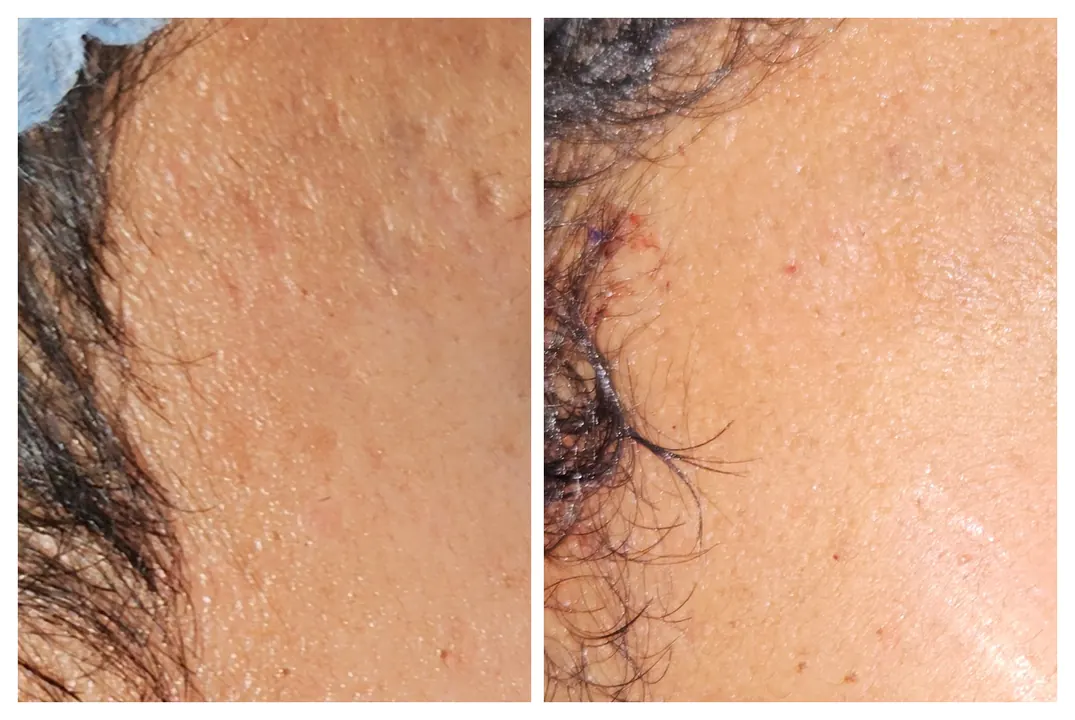 Acne Scar TreatmentTemple acne scars smoothedView acne scar treatment
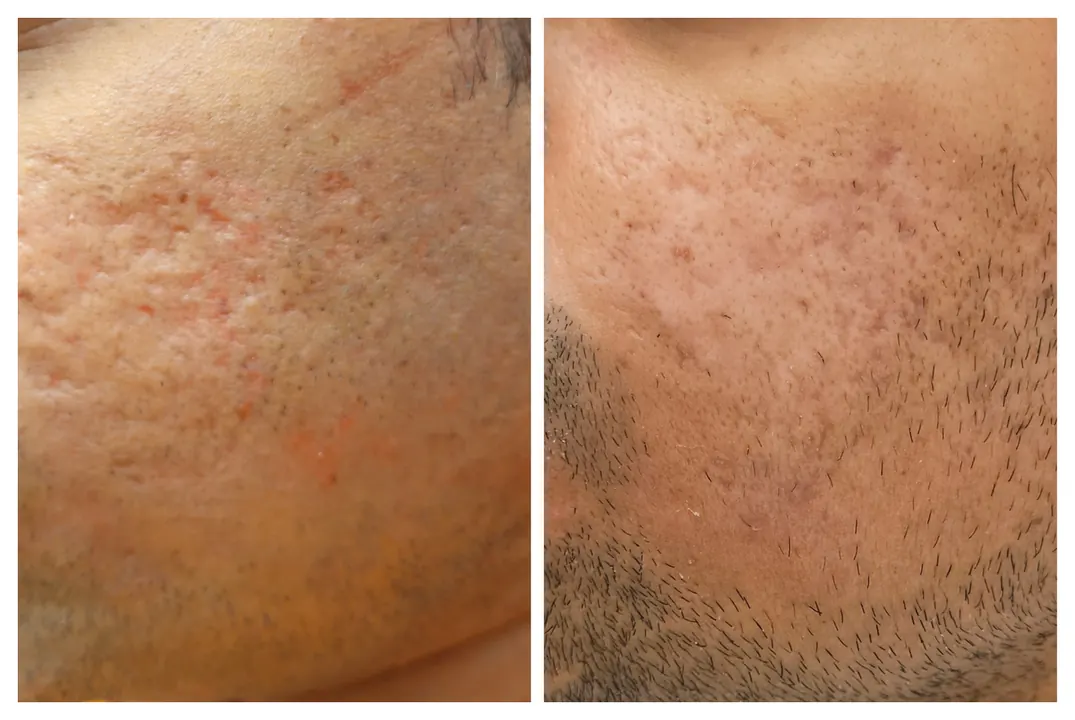 Acne Scar TreatmentCheek acne scars smoothedView acne scar treatment
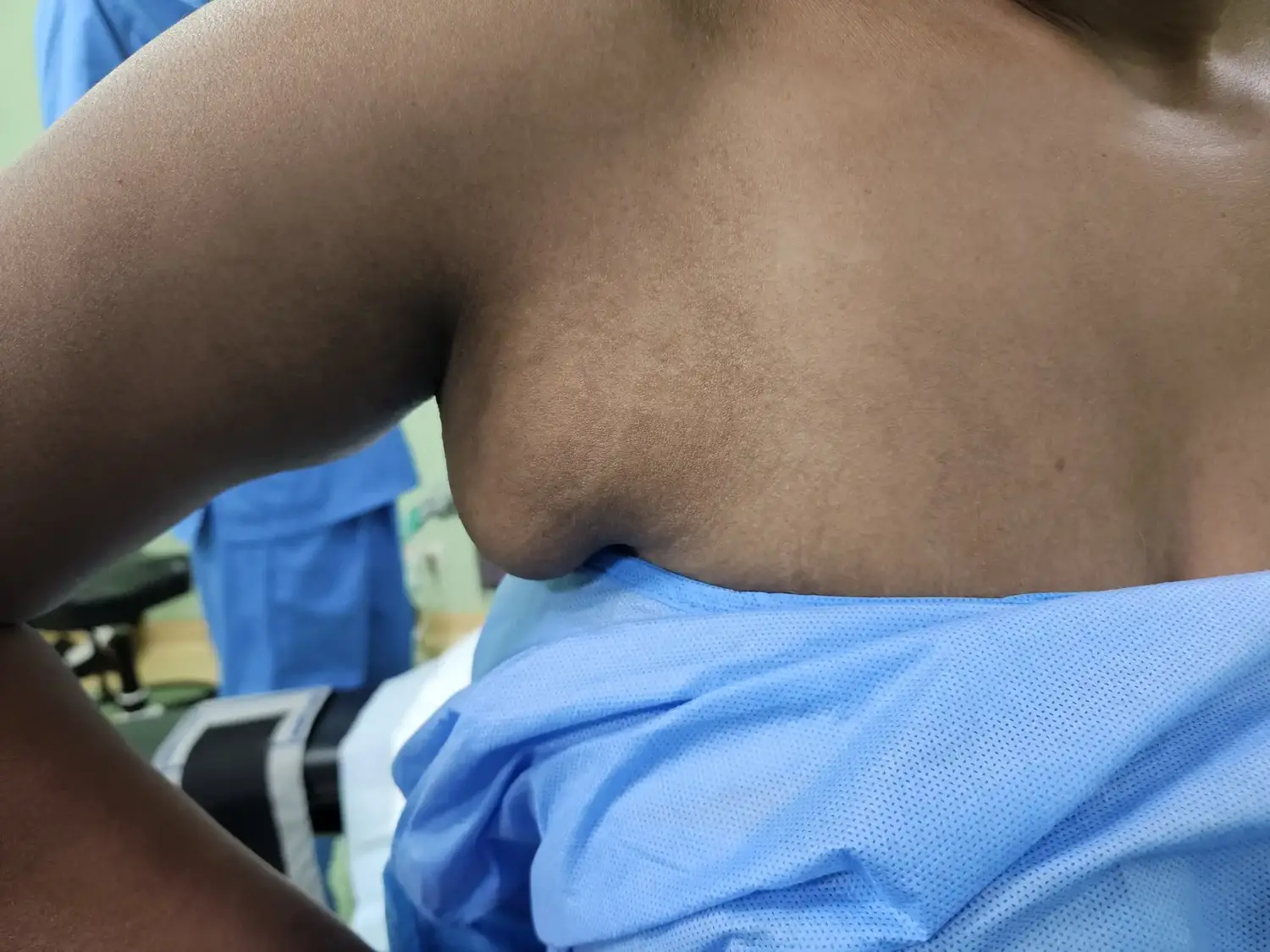
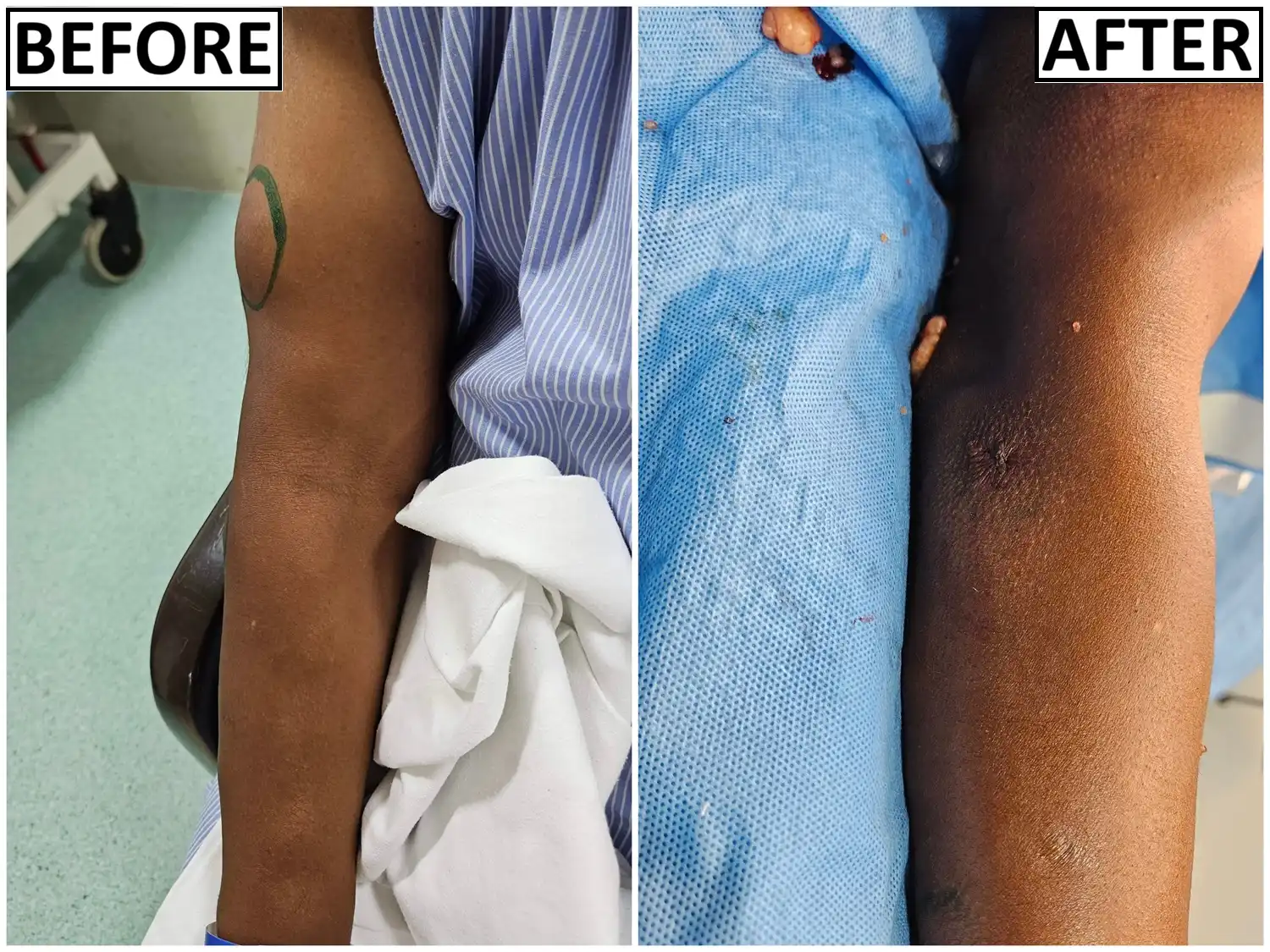
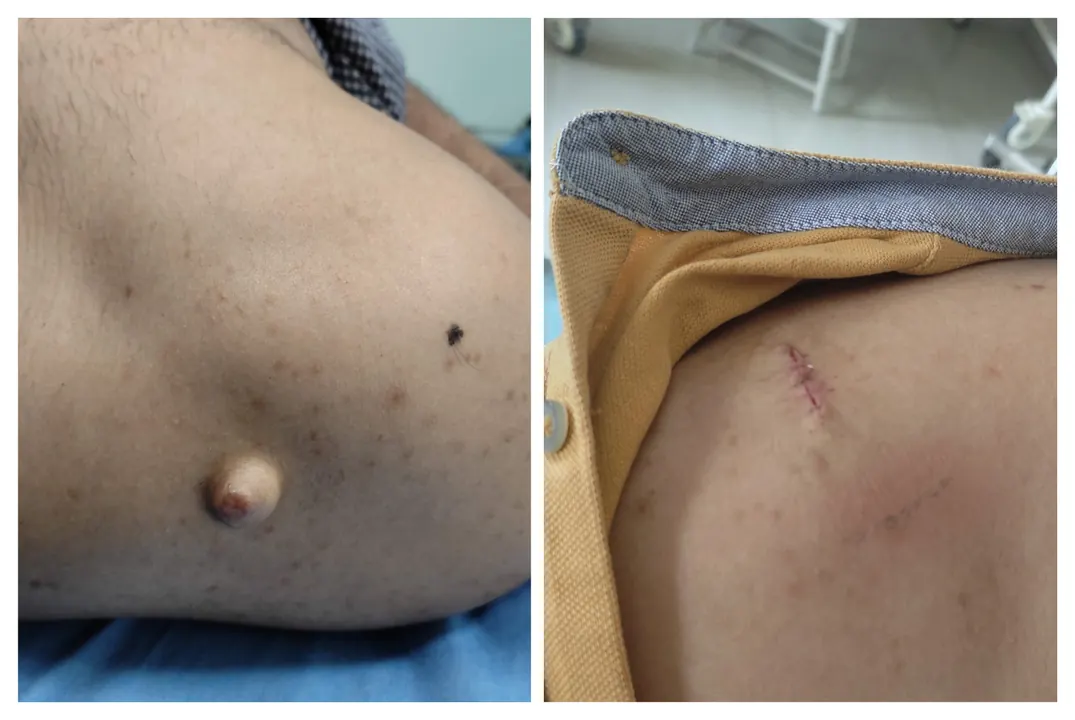 Sebaceous Cyst RemovalShoulder cyst removed whole, with its capsuleView sebaceous cyst removal
Shared with patient consent and masked for privacy. Individual results vary; these images are illustrative, not a guarantee of outcome.
This article is general information from a practising plastic surgeon. It is not a substitute for a personal consultation: every body, and every surgical plan, is different.