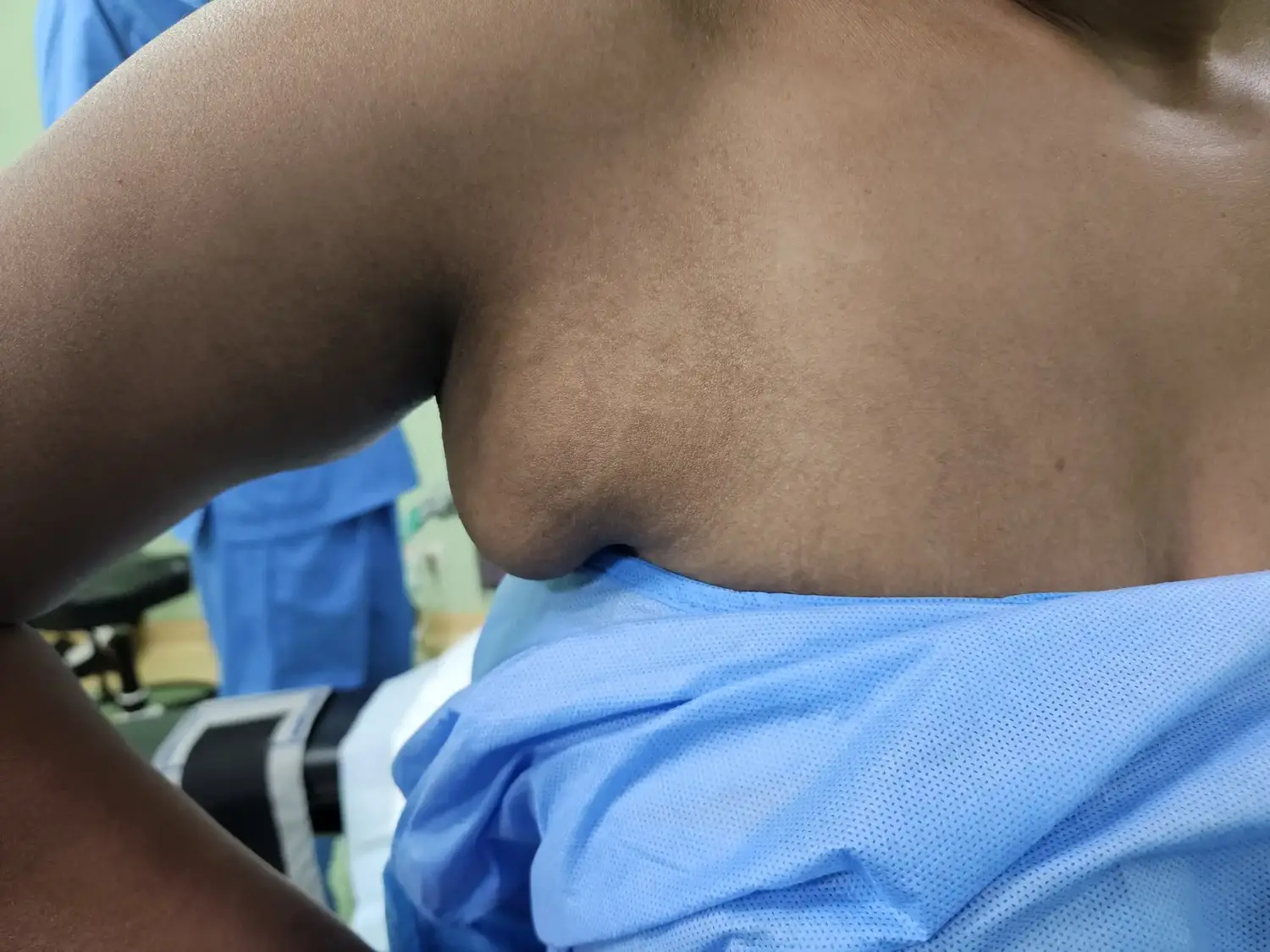
What Is a Lipoma? Why It Grows, When to Worry, and When It Should Come Out
Lipomas take and take and never give. Dr. Amrika explains why these fatty lumps ignore diet, how to tell them from cancer, and when they should come out.

In this article · 8 sections
A lipoma is a soft, slow-growing cluster of fat cells under the skin, inside its own capsule. It is mostly genetic, not caused by diet or lack of exercise, and it does not shrink when you lose weight. Most lipomas are harmless, but a lump that appears out of nowhere, grows over weeks, is stuck to the skin or muscle, or feels hard needs a surgeon’s examination and a biopsy. The only known safe way to remove a lipoma is lipoma removal surgery, and every specimen should go to the pathologist.
What is a lipoma? Or variations of the word that I’ve seen are lypoma, liphoma or even lyphoma (not to be confused with lymphoma, which is a very serious disease indeed). But what is it? Simply put- it’s a cluster of fat cells which don’t really follow usual patterns of fat growth.
How a Lipoma Is Different from Regular Fat
Regular fat is a blessing- it keeps us insulated, produces and responds to hormones, makes our skin soft and gives a chubby, healthy look to our face. It’s sometimes too much of a good thing though. There’s a part of fat architecture that deposits in predictable places such as the arms, breasts, thighs, belly and back. Then there are lipomas. These fat clusters do not seem to correspond to any set pattern of fat deposits. Even more bizarre, they tend to form and grow in places usually not subject to weight dependent fat gains, such as the forearms. I’ve had any number of patients who have blamed their diet (including, but not limited to, whey protein, chicken and soya chunks), their lack of exercise (not true in this case) and their lifestyle of stress accumulation that has led to these little lovable fat balls to occur. The reality is that most cases of lipoma are genetic (more on these later) and a few are what we call sporadic (occurs with no known genetic mutation).
Why a Lipoma Won’t Shrink When You Lose Weight
Let us suppose that lipomas were normal fat cells. The equation with most fat cells is simple- they have a lipid storage capacity, they grow as you feed them and shrink as you starve them. Lipomas are more like autonomous members in this Parliament of the Body. They take resources from the blood from their very own capsules, they grow and fill the cells of the lipoma with fat, but they never obey the signals to shrink when the signals come to empty the fat cells. So they take and take and never give. Rather selfish of them, in my opinion. What genetic survival advantage it confers on those who have this condition is unknown, though Darwinism suggests that there should be one. What is understood is that a person’s weight has not much to do with this condition. It matters not whether you are naturally thin or plump. What we understand from observation is this-
- it runs in families commonly, so having a parent or grandparent with this condition is common
- it matters if you are male or female. Men seem to be hit hardest here, with more numerous lipomas and larger ones too
- how old you are physically matters, with very low percentage occurring prior to your late teenage and very few appearing after the 60s.
Why Does a Lipoma Form, and How Does It Grow?
Why does it form? No idea, is the most honest reply here. If I could figure this out, I’d be in line for the Nobel Prize shortly. How it behaves, however, is predictable. It starts off as a pea sized swelling under the skin. The skin above the swelling remains free and unattached to the swelling and, in fact, can escape or slip away from the finger trying to catch it. This is a diagnostic sign called the “slip sign” and can be used to distinguish lipomas from other swellings which may look superficially similar to a lipoma. It then grows at a leisurely pace until it annoys the person hosting it by being too large, too ugly or too painful.
Could It Be Cancer? Four Warning Signs
Could it be cancer? There are a few signs that you should be aware of here.
- Cancer starts from scratch, and appears with no previous swelling in the area
- It grows rapidly, over a course of weeks, not months
- It attaches firmly to skin above and muscle below
- It feels hard rather than soft or firm.
If in doubt, there is no substitute for a good clinical examination by a surgeon and a biopsy. So I would encourage you to please come in for a consultation, rather than give yourself anxiety over every swelling that may or may not be a lipoma.
Does Every Lipoma Need Removal?
Does every lipoma need removal? A lipoma typically is removed if
- it overlies a nerve or blood vessels because it occupies space it has no right to and wreaks havoc with the quality of life
- it lies on a part that people use for activities of daily living. For example- a small 3cmx3cm lipoma on the arm may not bother anyone, but if that same one is on the lower part of the forearm where it rests against a desk, then this causes daily irritation and, eventually, pain.
- it looks odd- on the forehead, on the neck or a large one anywhere on the body.
Getting surgery is a deeply personal choice. More so for a lipoma, because it is elective surgery. So it comes down to whether your lipoma bothers you enough to look for a solution, and what that solution is.
How Is a Lipoma Removed?
The only known and safe method to remove lipomas is surgery. This mechanical removal works because it physically removes the contents of a lipoma fully. Whether or not it crops up in other parts of the body is something neither you nor the Surgeon can fully control. What surgery can do is remove that particular lipoma fully.
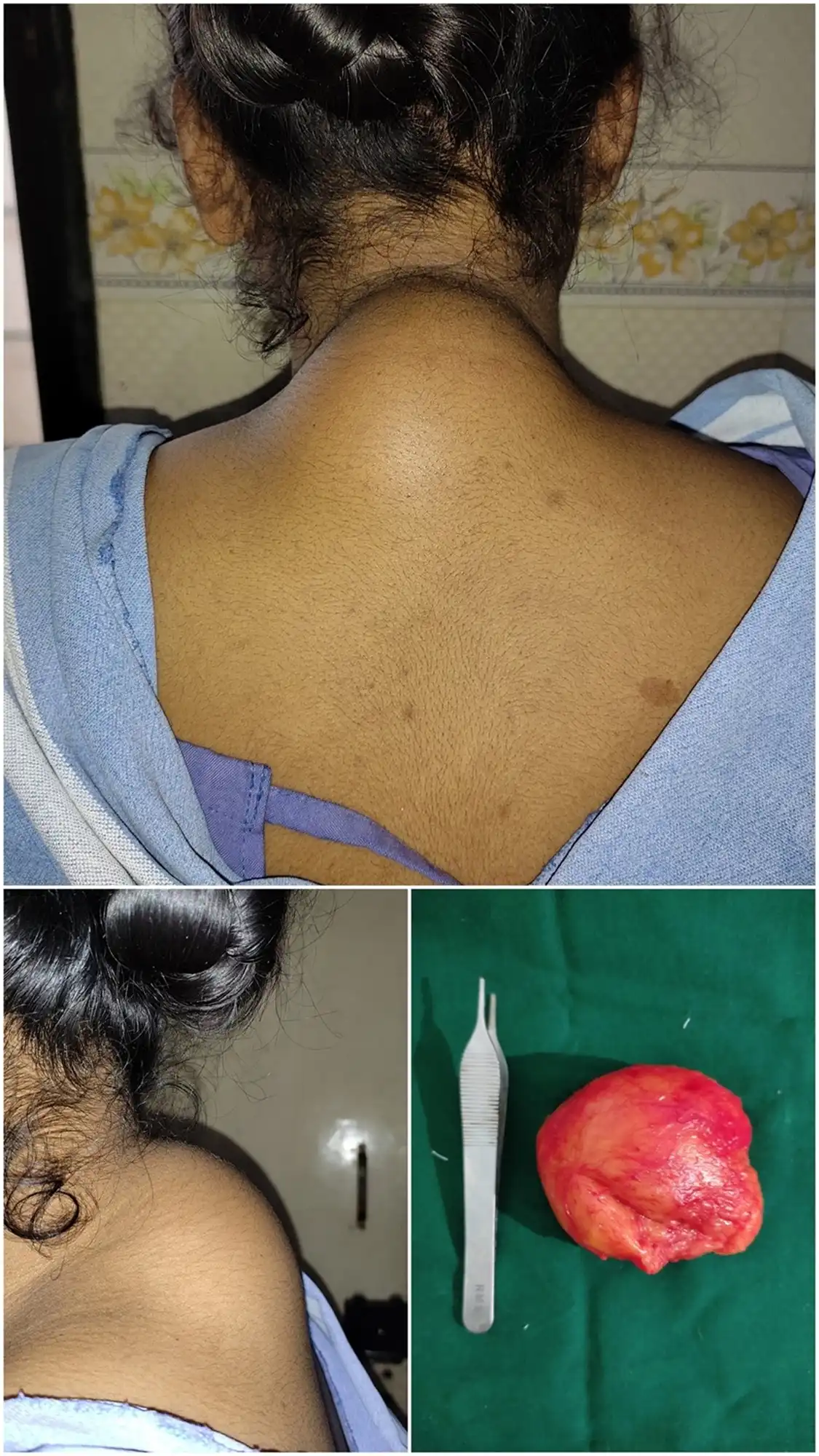
Another important part of lipoma removal surgery is what comes afterward. I don’t toss the extracted lipoma into the dustbin. The specimen is examined, labelled and sent to the Pathologist in a formalin preservative solution so it can be studied under a microscope. Not because I think it could be cancer, but because it is ethically wrong to assume that just because clinical examination says so, it cannot be anything but a lipoma.
Is Lipoma Surgery Safe?
Lipoma surgery is as safe as any other type of surgery, more so if at the level of just-below-skin and not in the muscle or abdominal spaces. So yes, lipoma surgery is surgery. It is also very manageable, and at Dr. Amrika’s Aesthetics, one of my favourite procedures to perform.
Frequently asked questions
What is a lipoma?
A lipoma is a cluster of fat cells under the skin, held inside its own capsule, that does not follow the usual patterns of fat growth. It usually starts as a pea-sized, soft swelling and grows slowly. It is not the same as lymphoma, which is a serious cancer of the lymph glands.
Can diet, exercise or weight loss shrink a lipoma?
No. Regular fat cells shrink when you lose weight, but a lipoma does not respond to the signals to empty its fat. Lipomas are mostly genetic and have little to do with your weight, diet (including whey protein, chicken or soya) or exercise.
How can I tell if a lump is a lipoma or cancer?
A lipoma is soft, grows slowly over months and the skin slides freely over it (the “slip sign”). Warning signs of cancer are a lump that appears where there was no swelling before, grows rapidly over weeks, is firmly attached to the skin or the muscle below, or feels hard. If in doubt, see a surgeon for a clinical examination and a biopsy.
Does every lipoma need to be removed?
No. A lipoma is usually removed if it presses on a nerve or blood vessel, sits where it rubs during daily activities (for example the lower forearm resting on a desk), or is visible on the forehead, neck or elsewhere because of its size. Since it is elective surgery, the decision is personal.
Will a lipoma come back after surgery?
Surgery removes that particular lipoma fully. Whether new lipomas appear in other parts of the body is something neither the patient nor the surgeon can fully control.
How much does lipoma removal cost in Bangalore?
At Dr. Amrika’s Aesthetics, indicative pricing is ₹40,000 under local anaesthesia to ₹90,000 under general anaesthesia, depending on the size, number, depth and site of the lipomas. The exact quote is confirmed at your consultation.
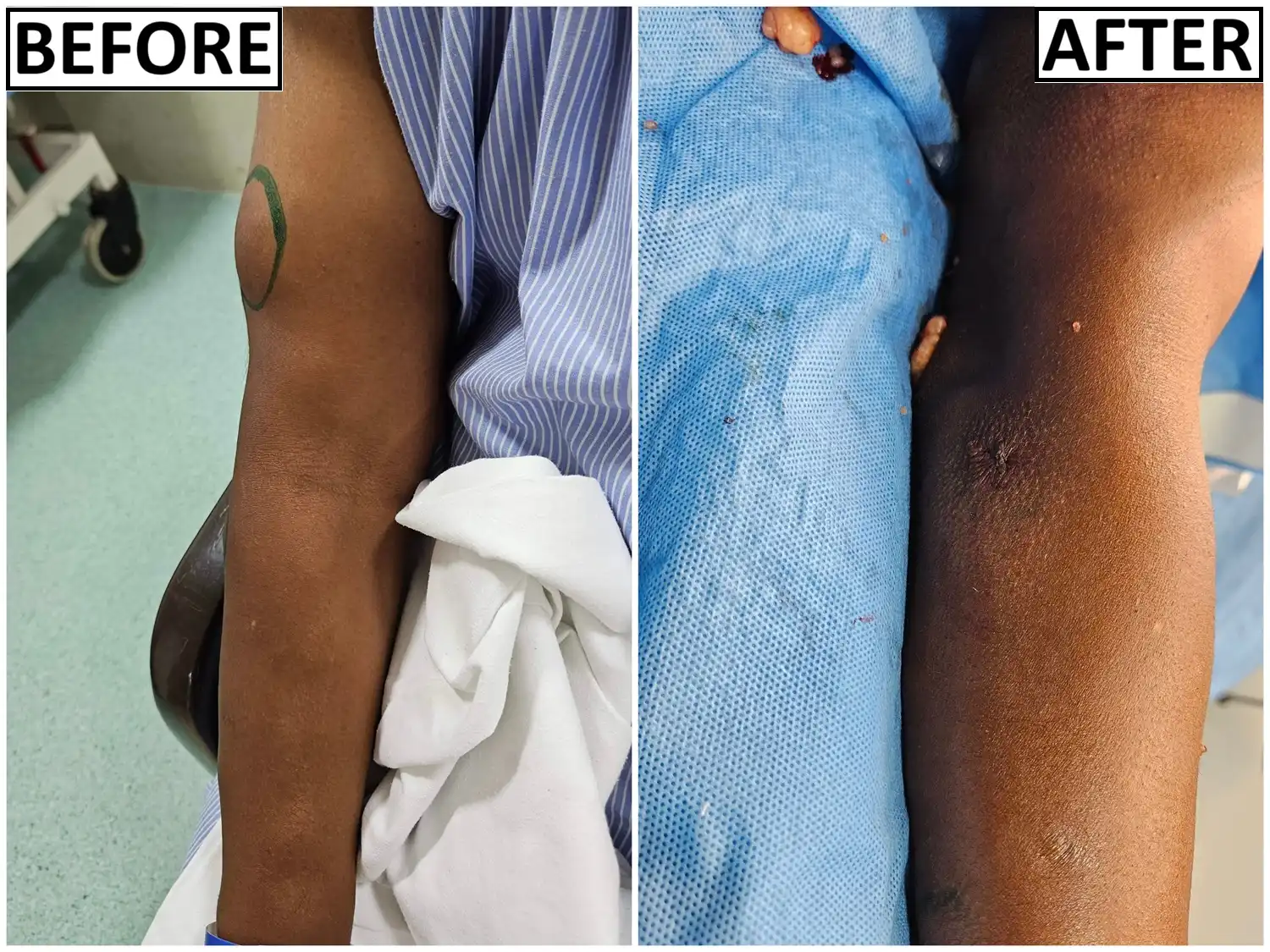
Results from Dr. Amrika’s practice
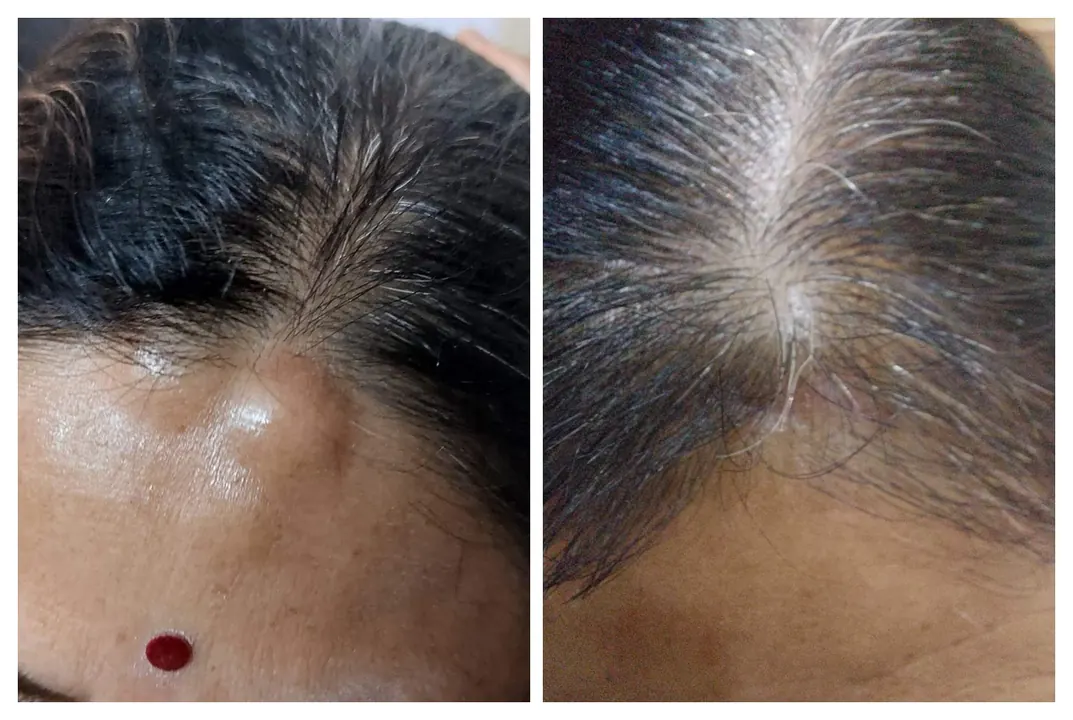 Lipoma RemovalForehead lipoma removed through a small incisionView lipoma removal
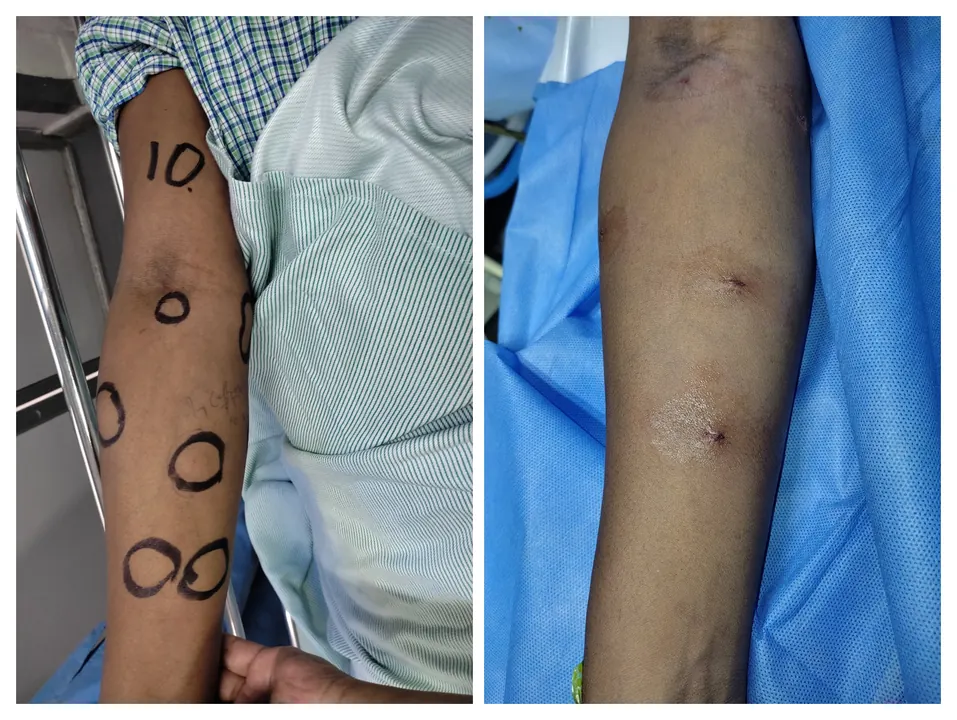 Lipoma RemovalMultiple forearm lipomas removedView lipoma removal
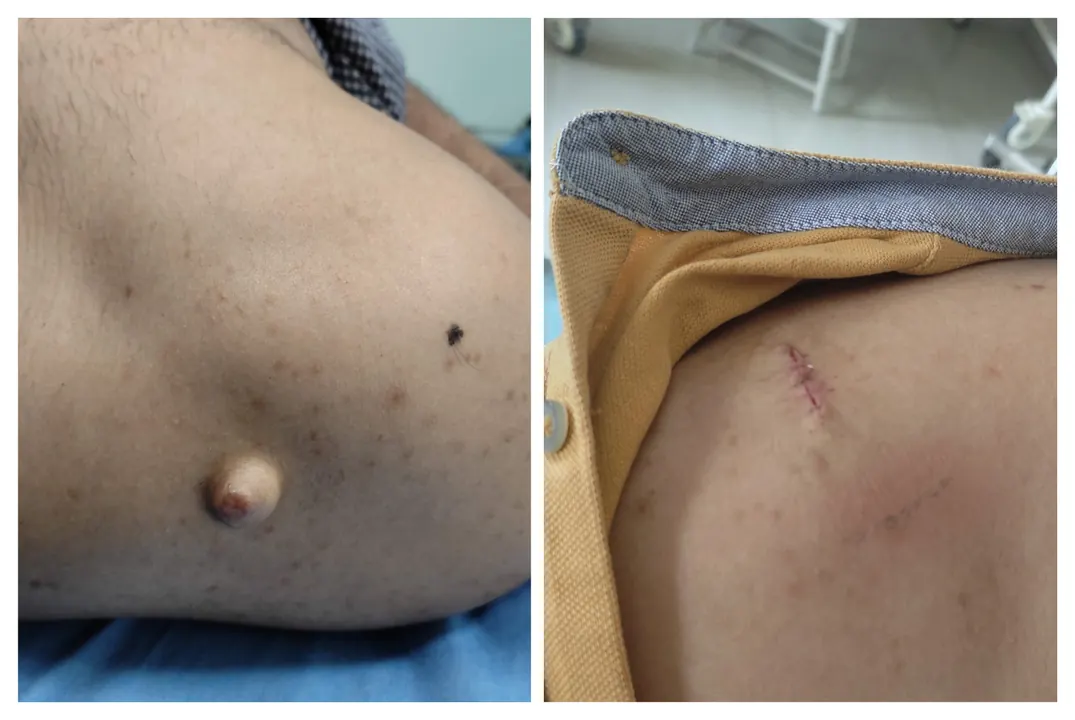 Sebaceous Cyst RemovalShoulder cyst removed whole, with its capsuleView sebaceous cyst removal
Shared with patient consent and masked for privacy. Individual results vary; these images are illustrative, not a guarantee of outcome.
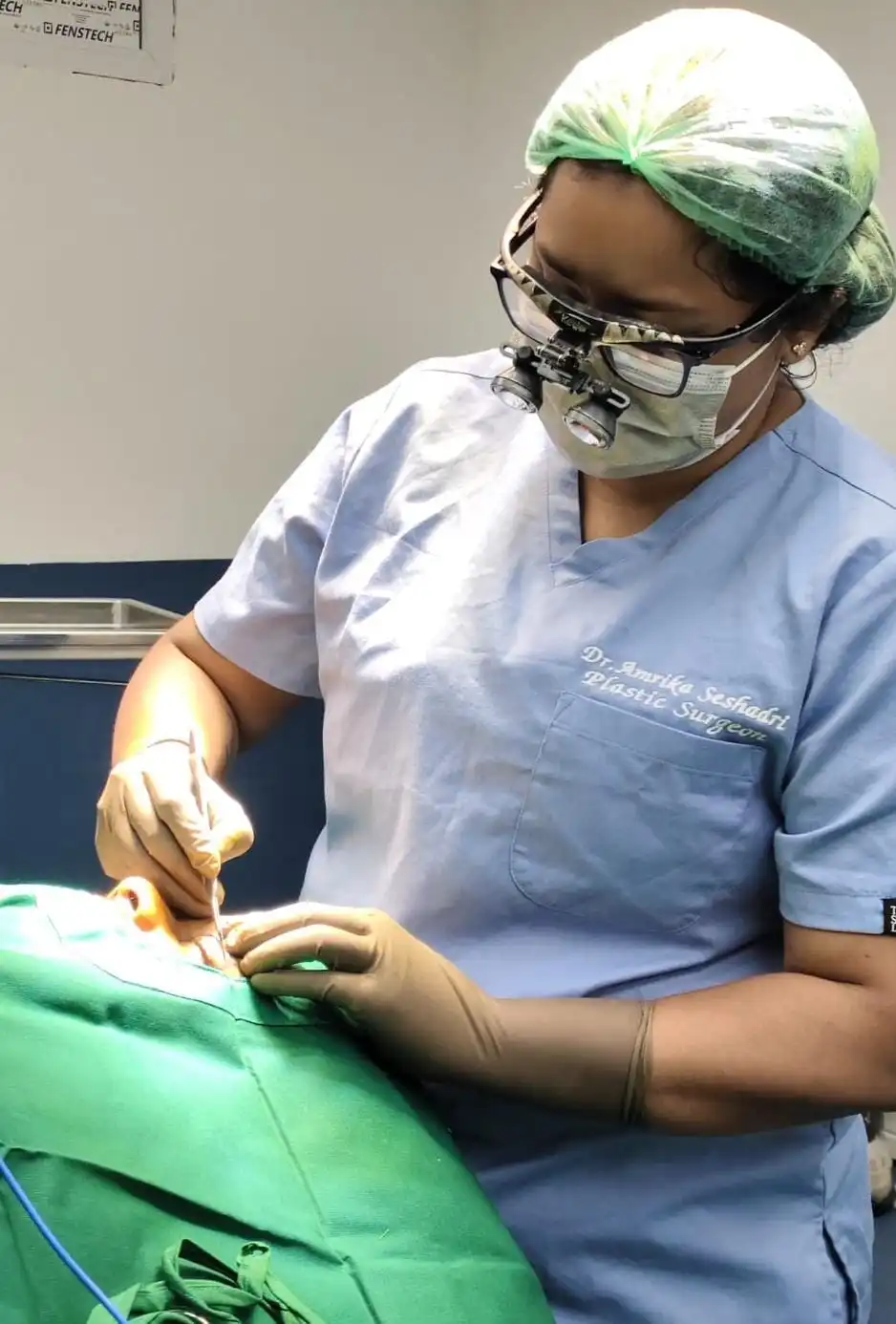
This article is general information from a practising plastic surgeon. It is not a substitute for a personal consultation: every body, and every surgical plan, is different.