Acne Scars: Why Acne Scars and Bengaluru Roads Are the Same
Why acne scars and Bengaluru roads are the same — and why creams fail. Bangalore plastic surgeon Dr. Amrika explains surgical subcision and fat grafting.

In this article · 6 sections
- The 3 Types of Acne Scars (and the Bengaluru Road Analogy)
- Option 1 vs Option 2: Tar Patches vs Honest Surgical Repair
- The Step-by-Step Surgical Approach: Subcision & Fat Grafting
- What Healing Really Looks Like: Swelling, Recovery & Timeline
- Scars vs Marks: Why We Don’t Carry ‘Acne Scar Removal Cream’
- Frequently asked questions
Surface creams and lasers fail on deep acne scars because they only patch the surface — like throwing tar into a Bengaluru pothole. Honest structural repair requires surgical subcision to divide deep fibrous tethers, autologous micro- and nano-fat grafting to prevent re-tethering, and focal TCA CROSS or punch excision in one comprehensive sitting.
I live and work in Bengaluru. I love this city, it has given me everything that a city can offer. This includes not only family, friends, great weather and nice people, but potholes and bad roads.
Let me tell you why acne scars and Bengaluru roads are the same. And why at my Sarjapura Main Road center, I can fix acne scars (though not the roads in front of it).
The 3 Types of Acne Scars (and the Bengaluru Road Analogy)
Acne scars, broadly speaking, are of 3 main types: icepick (thin and narrow), boxcar scars (shallow or deep with a canyon-like look), and rolling (like a speed breaker, shallow or high). Suppose the face is like the road — skin being the top asphalt layer, fat and muscle being the undergrading, and bacteria are Bengaluru rains.
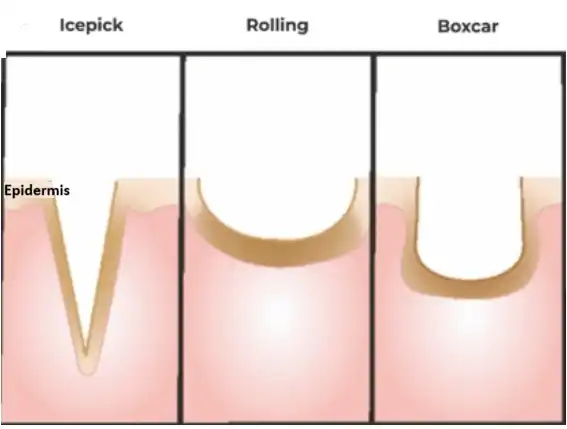
If the surface of the road (skin) is healthy, unchallenged, and well supported from within by hard compact (fat and muscle), then no rains (bacteria) can destroy it. But let’s say there is a crack, seepage occurs, and eventually the road is just filled with potholes (i.e., acne scars). If you were a contractor who needed to fix this, there are two ways to do this:
- Option 1 (Dishonest): You hire a temporary gang and fill up the potholes, not correcting the main issues, and do a patch-up job with just tar (creams, lasers, and serums).
- Option 2 (Honest): Dig up the road (subcision, TCA CROSS, punch excision), grade it well (fat grafting), and prevent cracks from forming ever again.
Option 1 vs Option 2: Tar Patches vs Honest Surgical Repair
I choose Option 2 — staying honest.
Creams, serums, and superficial cosmetic facials cannot rebuild missing subcutaneous tissue, nor can they cut the fibrous tethers pulling your skin down towards the facial fascia. Throwing expensive creams on a deep rolling scar is the exact medical equivalent of dumping loose tar into a rain-soaked pothole on the Outer Ring Road: it washes out with the next shower, leaving the structural deficit unchanged.
Real repair requires getting underneath the problem. This is how I approach acne scars at our clinic on Sarjapur Main Road:
- Detailed history: With past photos if available, looking for obvious nutritional deficiencies, history of hormonal changes, medications, and previous treatments — laser resurfacing, microneedling, PRP therapy, and creams used.
- Building the barrier: Remove active sources of infection, start oil control strategies, and FIX THE SKIN CARE ROUTINE!
- Checking blood tests: Ensuring you are medically fit and then scheduling the procedure.
The Step-by-Step Surgical Approach: Subcision & Fat Grafting
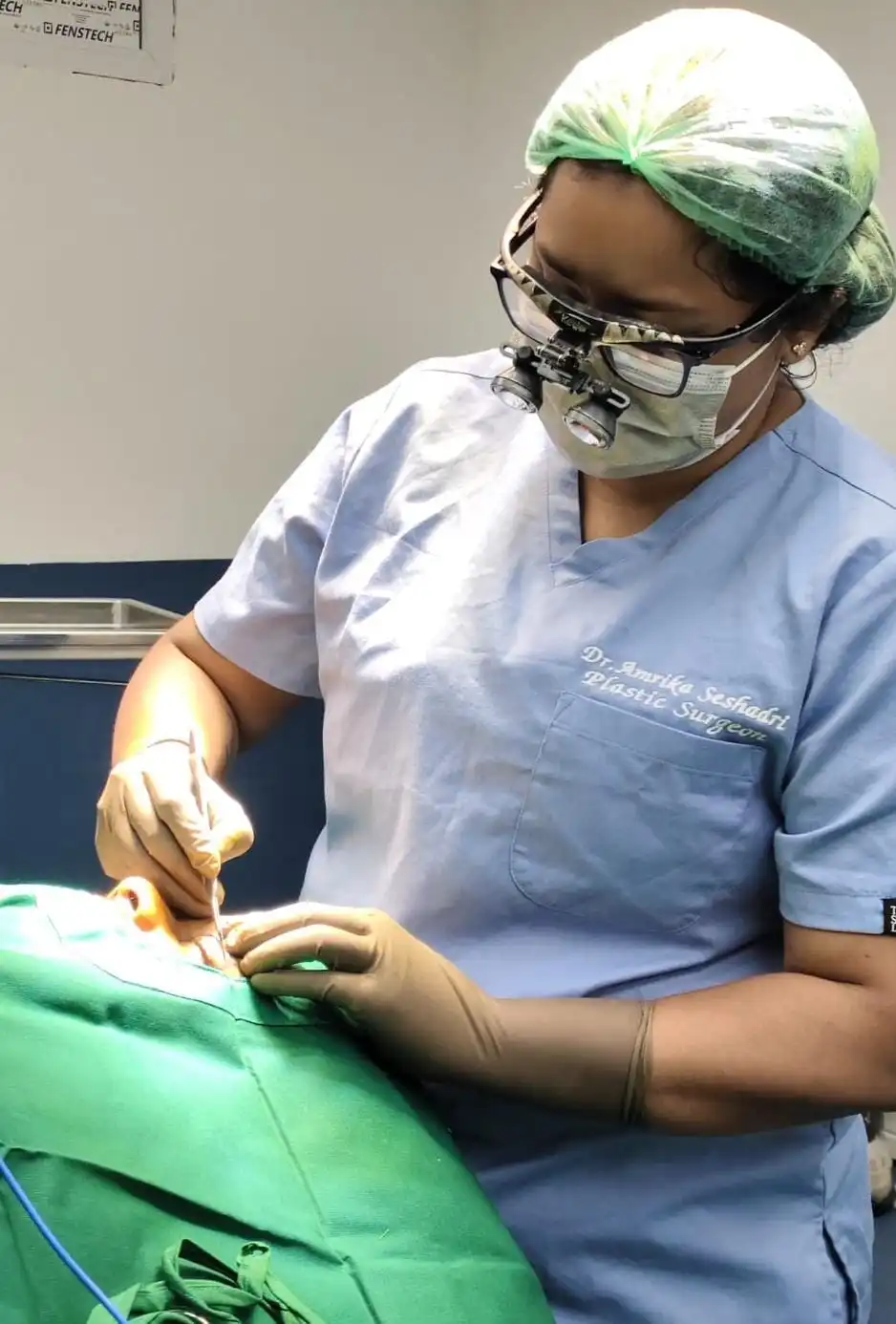
During the procedure under local anaesthesia (tumescent, my very own mix), the scars are lifted out of the scar tissue under the skin. Remember, we’re not doing a patch job — we’re levelling the tissue underneath and creating a smooth surface.
This smooth surface needs support from underneath, and that is where fat grafting comes in. Fat is extracted from the belly or the thighs and purified to get micro-fat and nano-fat:
- Micro-fat: Stays longer and creates living, structural healing tissues that physically block the severed fibrous bands from sticking back down.
- Nano-fat: Acts like an internal nutritional bath, rich in stem cells and growth factors that keep the healing tissues bathed in regenerative nutrients.
Once this is done, gentle skin resurfacing is performed to even out the skin tone with a chemical peel, and the more stubborn scars are either punch excised (similar to how hair follicles are extracted during a hair transplant) or painted with strong TCA (TCA CROSS) to even out the surface.
And that is it — hey presto! New, shiny, slightly swollen skin results. Now there are plenty of precautions that become necessary after this: food, mild exercise, gentle massage, and medications.
What Healing Really Looks Like: Swelling, Recovery & Timeline
What my patients complain of most is the swelling and the pigment issues after the treatment. Here, I ask them to be patient while they heal. I cannot give standard anti-inflammatory medication because that can interfere with fat cell survival.
In about 2 to 3 weeks, their face becomes entirely presentable, though still slightly swollen. This last bit takes up to 6 weeks to heal. But these concerns become secondary — I have had patients literally crying for joy at the end of 2 weeks. They look like they did as teenagers and cannot stop running their fingers over their new skin.
And the best part? This entire procedure is done in one session (just one sitting!) through a 3mm cut in the sideburn (hair in front of the ear) area and cannot be seen after those 2 weeks. Real keyhole, minimally invasive in nature, with real results seen shortly after the procedure.
Scars vs Marks: Why We Don’t Carry ‘Acne Scar Removal Cream’
Now a note of caution:
Not every acne scar needs such deep work. It is just that as a Plastic Surgeon, I am the Court of Last Appeal for people whose scars are not responding to other treatments. So I do whatever it takes to fix the scars including, but not limited to, all the steps mentioned above.
People often confuse scars with “marks”, which are pigment lesions (post-inflammatory hyperpigmentation or PIH) seen where the skin is damaged but the tissue underneath is not. Here is a quick test to distinguish the two:
- If a concealer fixes the issue, it’s an acne mark (PIH).
- If a concealer makes it worse by settling into the hole and deepening the shadow, then it’s a true structural scar.
This is surgery, this is surgery — I cannot emphasize this enough. I am a surgeon and I assess every scar. If it turns out that surgery is necessary to treat your acne scars, I’ll tell you so plainly. We do not carry “Pimple/Acne scar removal cream”, for pity’s sake.
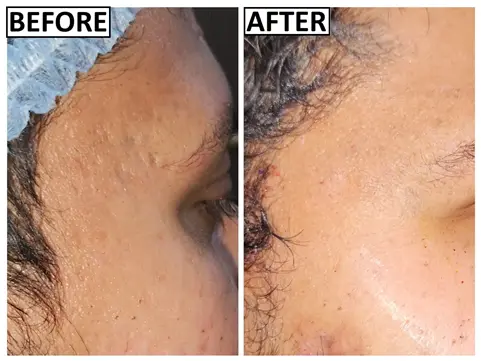
As a citizen, I cannot fix Bengaluru roads. But what I can do is give you gold-standard, proven, medically safe treatment so that your face does not resemble a pothole-ridden street. You have good health and a happy life. You certainly deserve a face that shines with smooth, clear, blemish-free skin. You can review real patient before-and-after results in our clinical results gallery or learn more on our acne scar revision page.
Frequently asked questions
Why do acne scar creams and surface lasers often fail?
Creams and superficial lasers only treat the top skin surface, acting like a temporary tar patch on a potholed road. Deep rolling and boxcar scars are anchored down by tough fibrous tethering bands in the deeper dermis and subcutaneous layer. Until those bands are surgically divided and the tissue underneath is rebuilt, the divot remains pulled down.
What is the difference between an acne scar and an acne mark?
Acne marks (post-inflammatory hyperpigmentation or PIH) are flat pigment changes where the tissue underneath remains intact. A quick test: if concealer hides the blemish, it is a mark; if makeup or concealer pools in the depression and makes the shadow worse, it is a true structural scar.
How does autologous fat grafting help acne scars?
When fibrous scar tethers are released via subcision, an empty space is left behind. If left empty, the body naturally deposits fresh scar tissue that pulls the skin right back down. Grafting your own purified micro-fat and nano-fat (harvested from the abdomen or thigh) acts as a living spacer that stops re-tethering and bathes the healing tissue in regenerative growth factors.
Is this acne scar procedure done in a single sitting?
Yes. The entire multimodal procedure — tumescent local anaesthesia, surgical subcision, micro/nano-fat grafting, and focal TCA CROSS or punch excision — is performed in just one sitting through a tiny 3mm hidden keyhole incision in the sideburn area.
Why can't I take standard anti-inflammatory painkillers after surgery?
Standard anti-inflammatory drugs interfere with the revascularization and survival of newly transferred fat cells. Mild swelling is a necessary part of the healing cascade while the grafted fat establishes its blood supply.
Results from Dr. Amrika’s practice
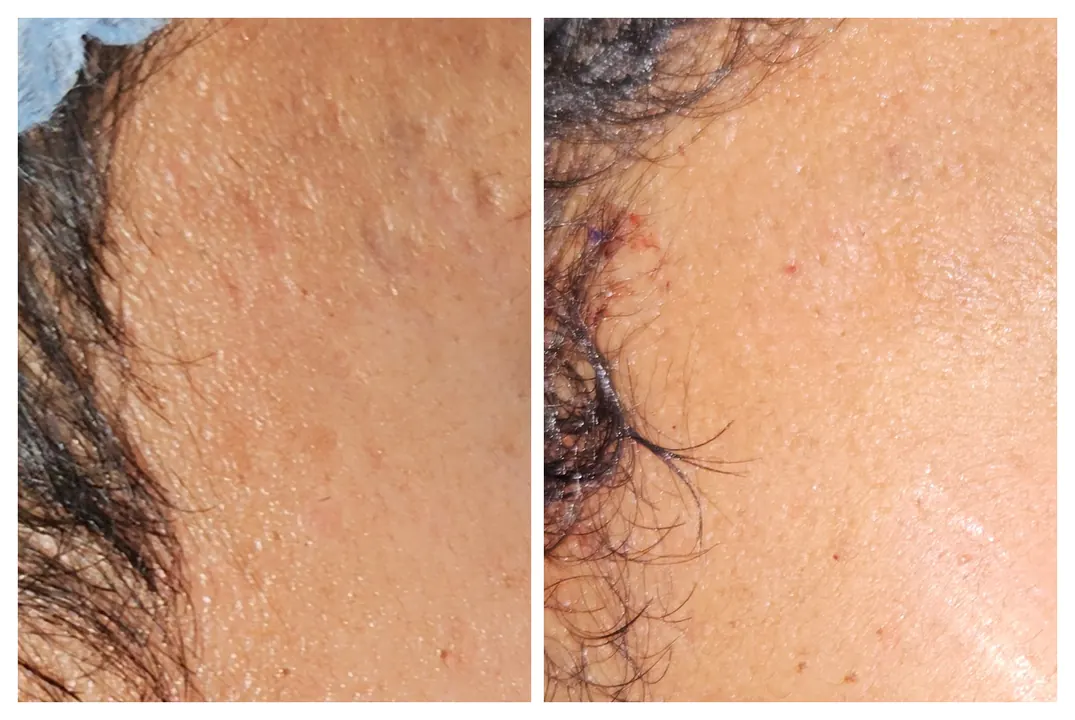 Acne Scar TreatmentTemple acne scars smoothedView acne scar treatment
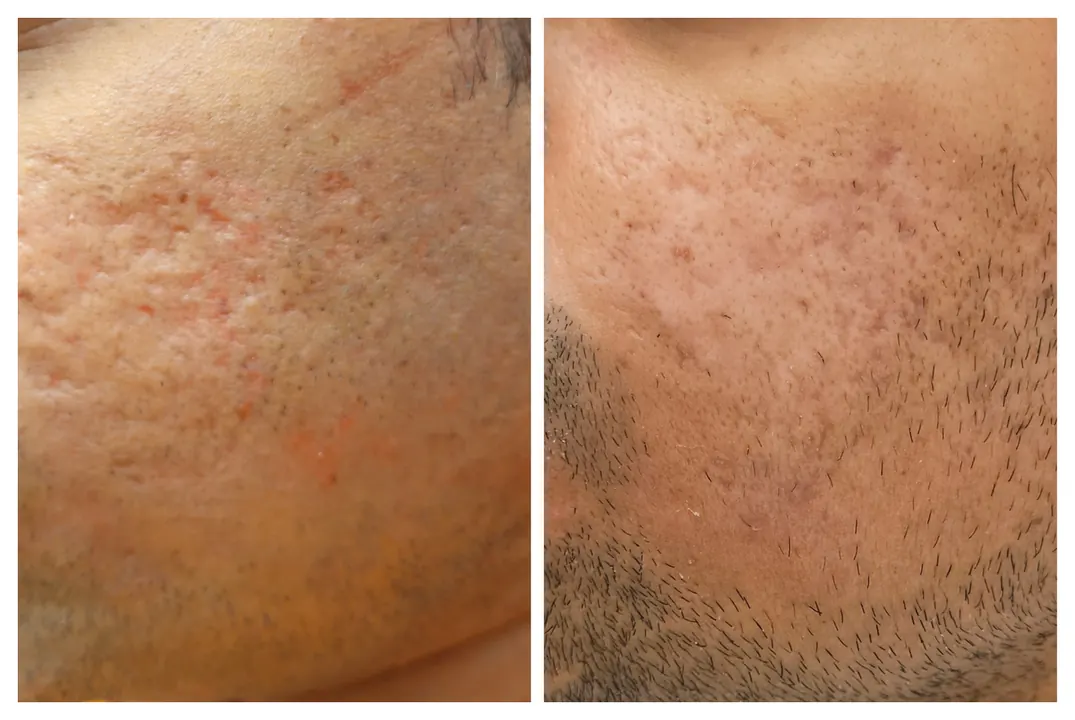 Acne Scar TreatmentCheek acne scars smoothedView acne scar treatment
Shared with patient consent and masked for privacy. Individual results vary; these images are illustrative, not a guarantee of outcome.
This article is general information from a practising plastic surgeon. It is not a substitute for a personal consultation: every body, and every surgical plan, is different.