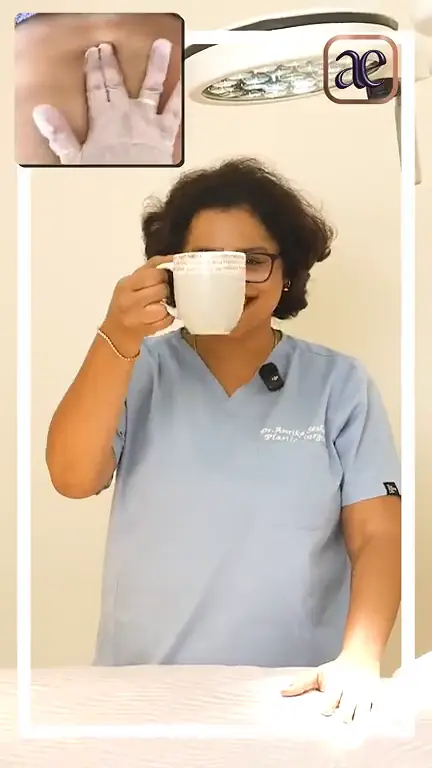
Torn vs Stretched Earlobes, and How We Repair Them
A Bangalore plastic surgeon on why earlobes stretch and tear, and how the Pardue flap repairs and reshapes the lobe so you can wear earrings again.

In this article · 8 sections
Stretched lobes (where the piercing hole widens past 3 mm) and torn or split lobes are both common and both fixable. The Pardue flap technique repairs the tear, reshapes a deformed lobe and preserves a real piercing channel — under local anaesthesia, with earrings placed in the same sitting.
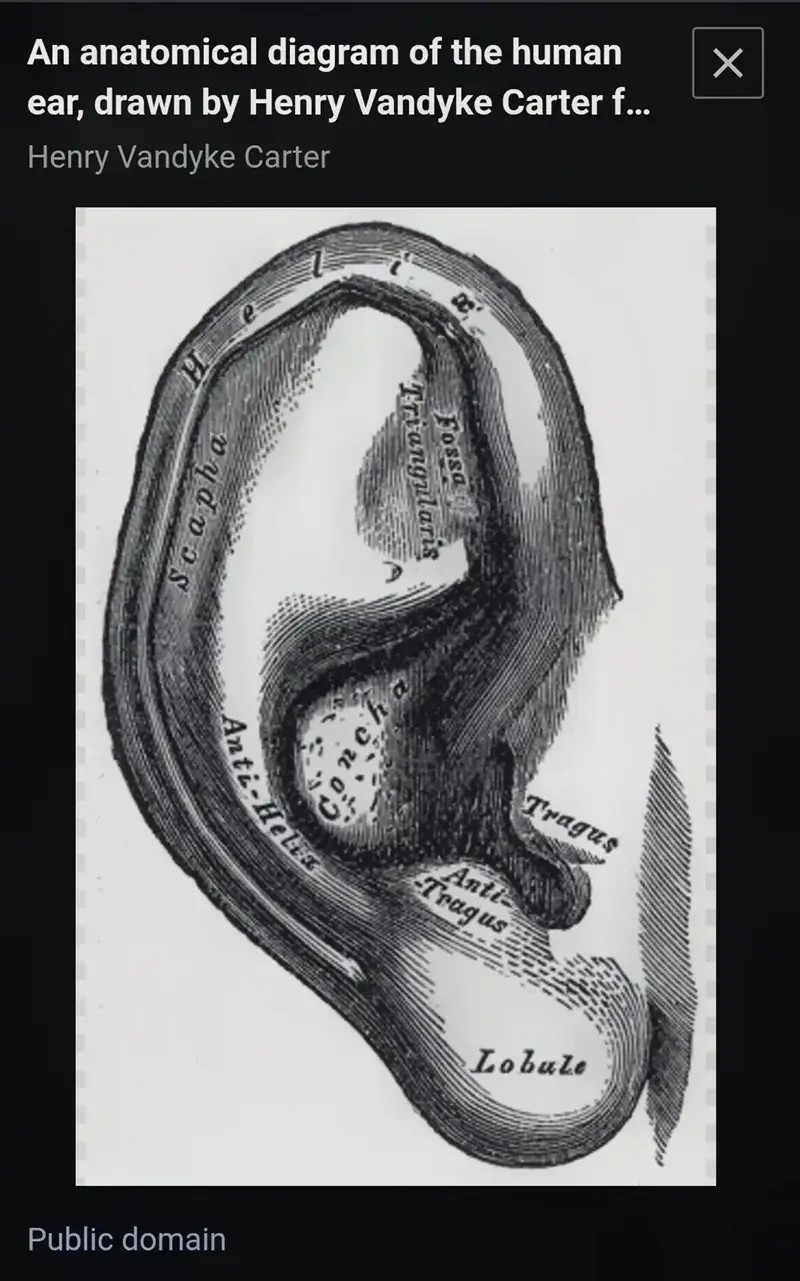
Earlobes are one of the most visible parts of a human face in the side profile. This fleshy structure, made of skin and fat, is different from the rest of the ear in two ways: it has no cartilage (the semi-rigid structure that gives shape to the nose, upper ear and ribs), and it is absolutely filled with blood vessels.
And so it goes that these fleshy bits are used for decoration. Earrings are known in every culture — India, China, East Africa, Europe. There is even a famous painting by Vermeer, “Girl with a Pearl Earring,” later made into a film with Scarlett Johansson. Across multitudes of cultures, an earlobe piercing is not only expected but, in many, culturally necessary — from Tamizh babies getting kaadu kutthal at 11 months to people visiting the jeweller at 18 for pretty earrings. Earlobes have long been considered the ultimate in fashion.
How earlobes get damaged
With all good things comes the flipside. Earlobes can get stretched, torn and deformed in several ways. Let’s break it down.
Stretched earlobes (the commonest)
Stretched earlobes are the most common problem, with the weight of the jewellery pulling down on the not-so-strong skin and fat. It leaves piercings that are 3 mm or longer and no longer permits regular earring use — for context, earlobe piercings are usually 1 mm to 1.2 mm in diameter. Women try silicone glue strips or buttons to wear earrings at least for special occasions. This can be especially difficult for older women, as not wearing earrings to an occasion is seen in many cultures as a sign of mourning.
Torn and split earlobes
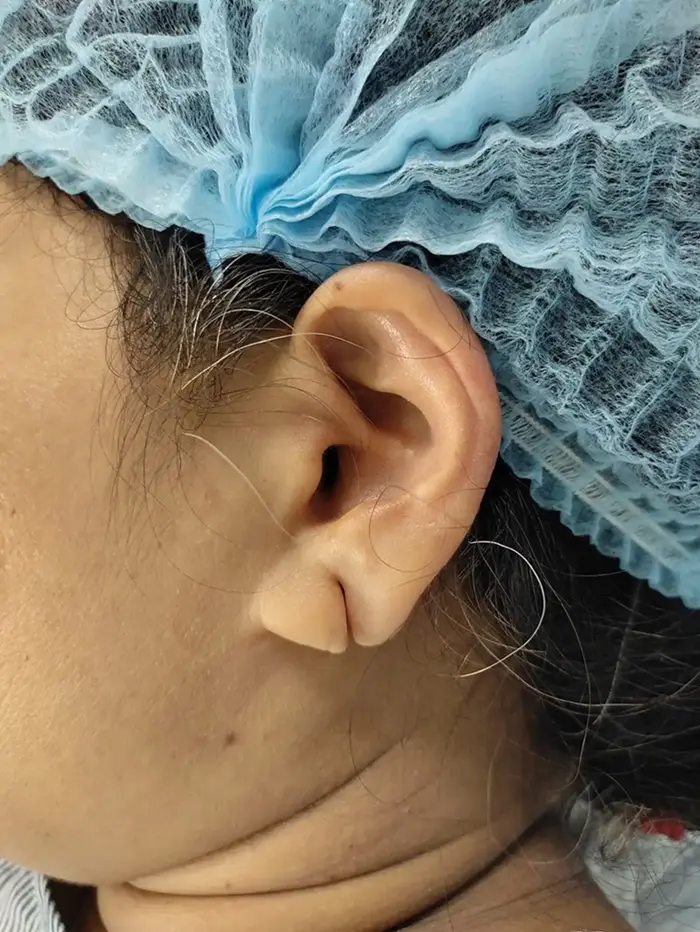
Say a lady ignores a piercing that has stretched beyond 3 mm. It can tear completely, leaving a cleft lobe — which is itself a sign of shame in many cultures. It also deforms the earlobe, taking it from a neatly rounded shape to a hanging triangular shape that creates the typical “Buddha ear” appearance.
Another way earlobes tear can be heartbreaking: earrings getting caught in clothing, especially in young children, and being ripped off. This is one of the true emergency situations and can get very messy, as this kind of facial injury can bleed a lot.
And then there is the DIY damage
Finally, there is stupidity. Imagine having a mole on your face and asking the lady who does your eyebrow shaping to burn it off with matches. Yes — this is what some people are getting done to their ears: acid, flame, industrial glue and what-not poured into their piercings to allow a “no-stitch repair.” There is a particular salon that apparently specialises in this type of mutilation. I have a couple of rant-videos about this, so be sure to check those out too.
Why the older repair methods fell short
Stretched and torn lobes are among my favourites to fix. The older techniques were relatively simple: you cut out the edges of the earlobe piercing with a scalpel, stitched the ends together to create an intact earlobe, and then re-pierced the same site after 8 weeks. There were two problems with this approach:
- Earlobe shape as a whole was not given any importance, so a triangular, deformed earlobe stayed that strange, unnatural shape even after repair.
- The piercing was carried out over a scarred-up area, so the weight-bearing capacity of the lobe was diminished — so much so that the newly repaired earlobe often tore again within a few years.
The Pardue flap technique
To combat these issues, I use the Pardue flap technique, which has been around since the 1970s and has been popular in India for a decade. In fact, at my aesthetic and plastic surgery centre on Sarjapur Main Road, I almost exclusively use the Pardue technique. Its best features are:
- Done under local anaesthesia, so the safety factor is fantastic. Even diabetics and hypertensives — and we get a few, believe me — do very well on the healing side.
- Stitches are usually self-dissolving, so there is no need to come in for a stitch removal.
- Earlobes can be reshaped from an ugly triangular form to a smooth curve in the same sitting.
- And this bit is my favourite — you can wear earrings immediately. The earrings I use are made of stainless steel and zirconia, so absolutely no reactions can occur. During the procedure, the stretched or torn earlobes are repaired, the shape is corrected, and pretty earrings are placed.
A more detailed note on the actual technique and results is on our earlobe repair page, so head there for more — and you can see real results in our before and after gallery.
In summary
Earlobe repairs are one of my favourite minor procedures. The patients get beautiful earlobes with an earring in place, and I get immense satisfaction looking at their delighted faces. What more could a plastic surgeon ask for?
Frequently asked questions
What is the difference between a stretched and a torn earlobe?
A stretched earlobe is a piercing hole that has widened to 3 mm or more under the weight of jewellery (a normal piercing is about 1 to 1.2 mm). A torn earlobe is when that stretch gives way completely into a cleft, or when an earring is pulled right through the lobe.
Can a stretched or torn earlobe be repaired?
Yes. The Pardue flap technique repairs the split, reshapes a hanging triangular lobe back to a smooth curve, and preserves a living piercing channel — all in the same sitting.
Can I wear earrings again after earlobe repair?
Yes — immediately. The earrings used are stainless steel and zirconia, so no reactions occur, and they are placed during the procedure itself.
Is earlobe repair painful, and will the stitches need removing?
It is done under local anaesthesia, so it is very safe — even diabetics and hypertensives heal well. The stitches are usually self-dissolving, so there is no stitch-removal visit.
My child’s earring tore their earlobe — is it an emergency?
Yes. Earrings caught in clothing and ripped out, especially in young children, are a true earlobe emergency and can bleed a lot. It should be seen urgently.
Results from Dr. Amrika’s practice
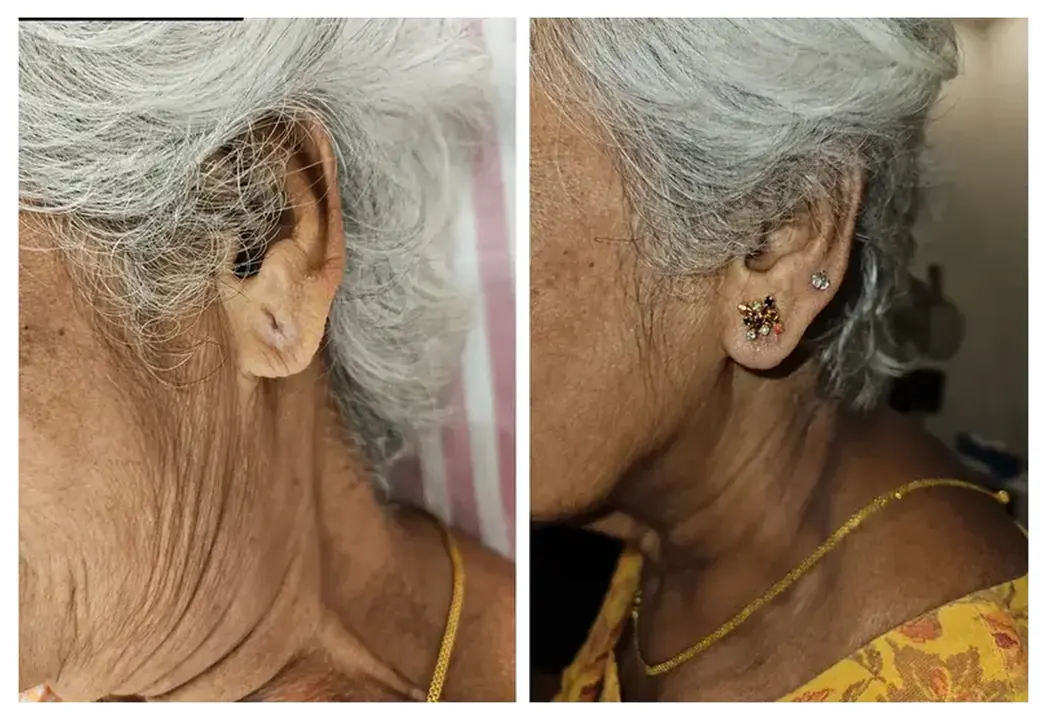
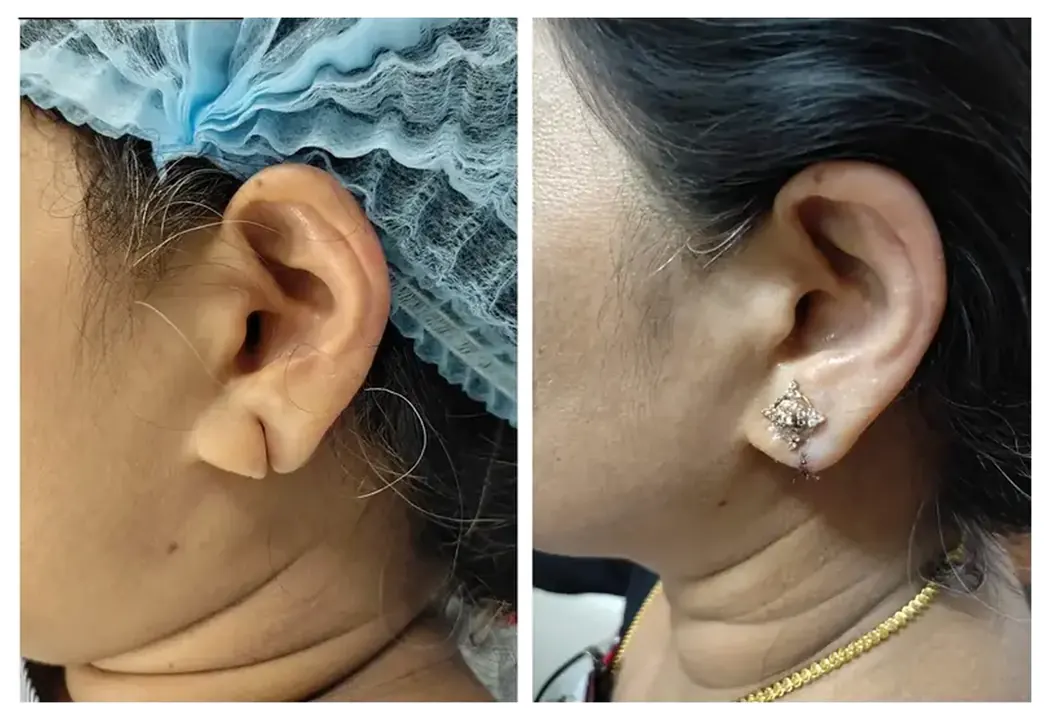 Earlobe RepairSplit earlobe repaired, wearing studs againView earlobe repair
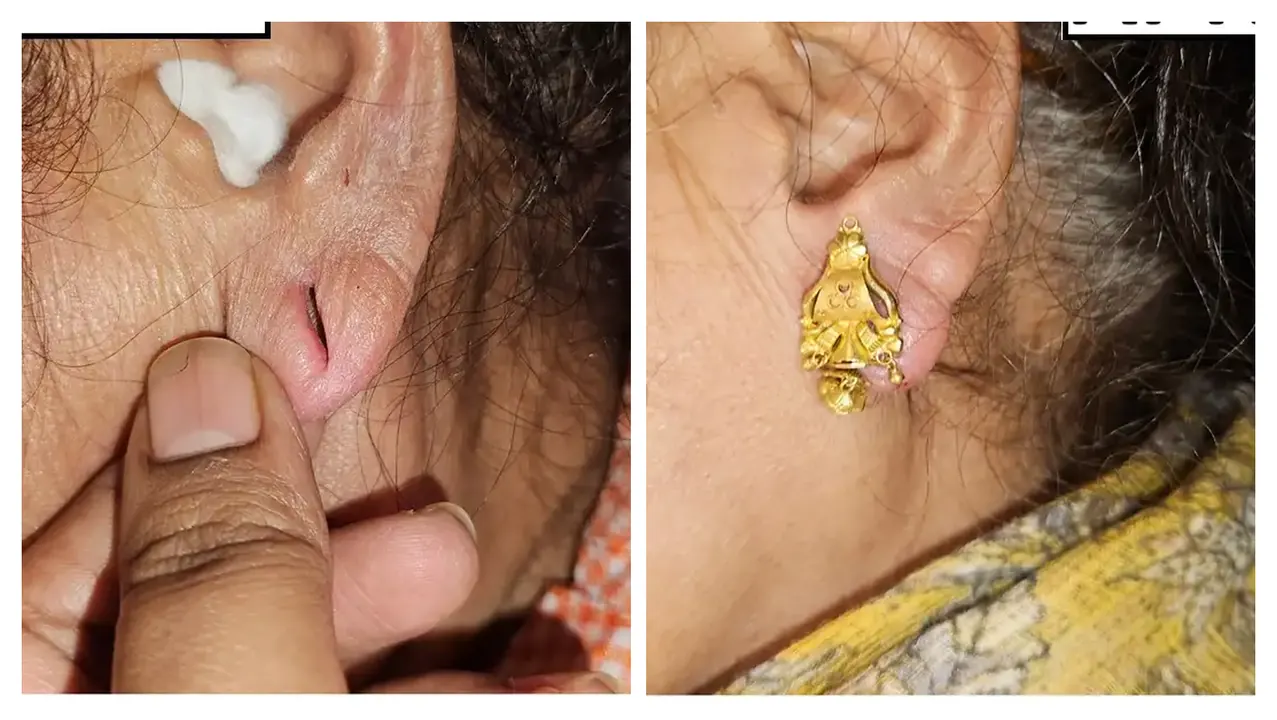
 Earlobe RepairTorn earlobe repaired, earrings back inView earlobe repair
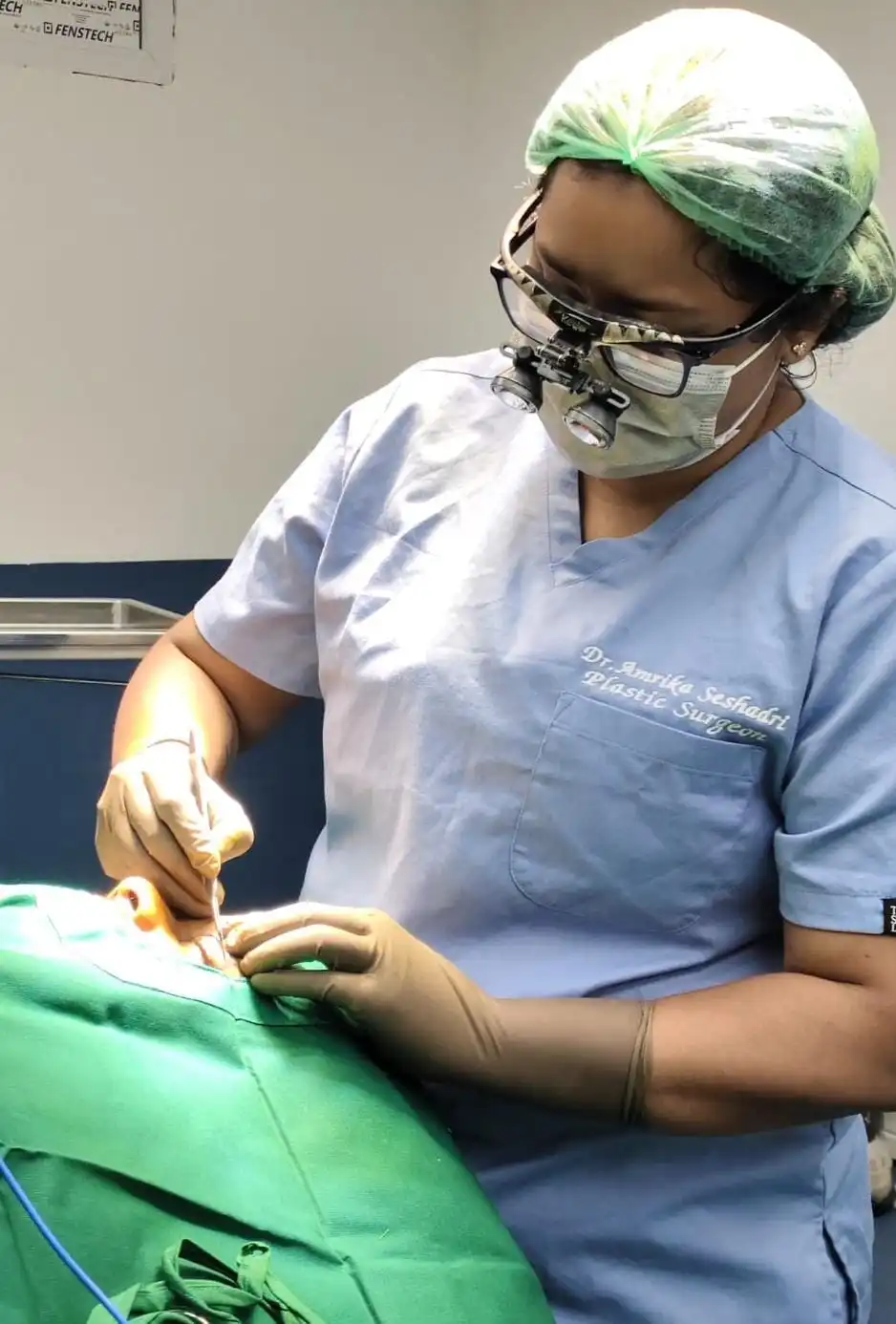
 Earlobe RepairSplit lobe closed, earring worn againView earlobe repair
Shared with patient consent and masked for privacy. Individual results vary; these images are illustrative, not a guarantee of outcome.
This article is general information from a practising plastic surgeon. It is not a substitute for a personal consultation: every body, and every surgical plan, is different.