Is Liposuction Safe? Will My Skin Sag After Liposuction?
A Bangalore plastic surgeon on how tumescent VASER / UAL liposuction stays safe and keeps skin from sagging.

In this article · 6 sections
- From Dangerous to Routine: A Short History of Liposuction
- Tumescent Liposuction: Flooding the Fat Before You Remove It
- Liposuction Removes Fat — But It Won’t Tighten Loose Skin
- Melting Fat Into “Fat Soup”: VASER / Ultrasound-Assisted Liposculpture (UAL)
- So — Is Liposuction Safe, and Will Your Skin Sag?
- Frequently asked questions
Yes — liposuction is a genuine surgery, but with modern tumescent technique it is as safe as most elective operations, with only about 40 ml of blood loss per litre of fat removed. And with VASER / Ultrasound-Assisted Liposculpture (UAL), the collagen bands under your skin are preserved, so the skin tightens and noticeable sagging is unlikely.
Liposuction remains one of the most sought-after procedures for body sculpting. After hours in the gym, watching macros and weight training, there are (usually) a few stubborn pockets of fat— notably, the flank (love handles), the arms (batwing) and the chest (gynaecomastia). Liposuction is the only tool in the armamentarium of the Plastic Surgeon to target these fat pockets, rather like a heat seeking missile that will target the fat (i.e. the enemy jet fighter) and leave the harmless clouds (i.e. muscles) intact.

From Dangerous to Routine: A Short History of Liposuction
It started off with regular fat removal in the late 1900s. The concept was simple— knock the patient out with ether, push in a sharp cutting tube and voila, fat comes out. The problem was— fat has a lot of blood vessels, like a lot! Fat was removed with sharp instruments and this caused such catastrophic bleeding, the procedure was abandoned. A procedure where 1L of fat and 500ml of blood loss occurred cannot be acceptable to anyone. And so liposuction was deemed dangerous and stopped.
Then some bright cookie realized that if you flood the area from which you want to remove fat with some potent blood loss prevention drug (like adrenaline, which is a vasoconstrictor), then you remove the fat and maybe, maybe lose 4% of the fat volume removed. To put it another way, every one liter of fat removed causes only 40ml of blood loss. For context, 40ml of blood lost is less than the blood shed during a (normal) period for an adult lady. Thus was born tumescent use in liposuction.
Tumescent Liposuction: Flooding the Fat Before You Remove It
This then underwent several iterations— wet technique, superwet technique (not as racy as it sounds, just means that there is more flooding with fluid prior to fat removal), additives such as lidocaine (a numbing medication), bupivacaine (cousin to lidocaine), hyaluronidase (to loosen the gummy material that holds fat cells together), triamcinolone (a mild steroid, so that tissues don’t protest at their summary removal) and so on. Even today, no 2 Plastic Surgeons will agree on what is the exact and correct formula for their infiltration solution i.e. they are willing to admit that infiltration used by others is fine, yet not as good as their own secret formula. Be that as it may, the baseline understanding of tumescent anaesthesia is that you use fluid, such as Ringer Lactate or Normal Saline, equivalent to how much fat you are willing and required to take out of the area, add adrenaline and a numbing agent, plus whatever secret ingredient X you find works best, flood the area and wait for 10 minutes. Then remove the fat from that area and rejoice in your work, as you thank the Spirits That Be that you’re a Plastic Surgeon and love your job.
Liposuction Removes Fat — But It Won’t Tighten Loose Skin
There’s a couple of problems with this though. Liposuction removes fat. No question, period. What it does not do is:
- tighten loose skin
- preserve the collagen bands between the skin and the deeper muscle layer
Traditionally, excess loose skin was removed by the removal of ellipses of skin to tighten the skin which was liposculpted. For example, if you wanted slimmer arms and you had pretty chunky ones to begin with, then the surgeon would recommend that we remove fat (aka tumescent liposuction) and then take off the skin which would hang like a distressing curtain from the armpit to the elbow crease. Will tighten up the skin for sure. Also left very long, very ugly scars. And in Indian skin types of Fitzpatrick Type 3 (think Aishwarya Rai), Type 4 (Konkona Sen) and Type 5 (Rajinikanth Saar!), these scars will really never fade. There’s a lot to be said about advances in arm lift technique and I’ll be sure to hit that up in another blog. But for now, focus on the topic, if you please.
Melting Fat Into “Fat Soup”: VASER / Ultrasound-Assisted Liposculpture (UAL)
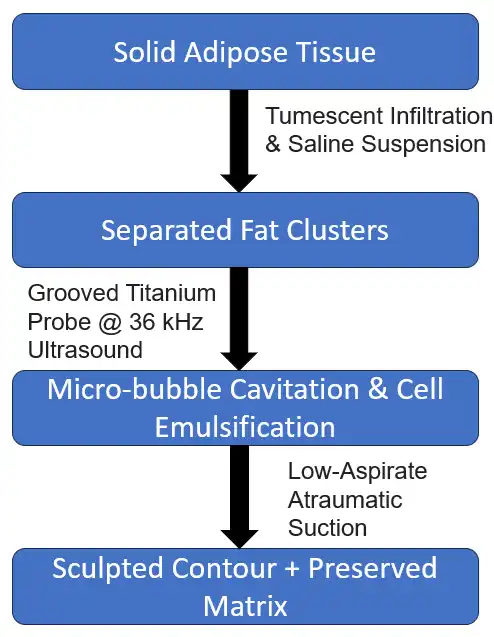
What if there was a way that instead of mechanically pulling out semisolid fat, we could liquify it? Turn it into fat soup and gently suction it away? Why, you may ask— It’s because the pushing and shoving in a suction-only type of liposuction strips away the connections between skin and muscle. If there was technology to “melt” fat during surgery, then removal of said melted fat is an atraumatic process. Bonus point here, those intact collagen and tissue pillars cause the skin to move rapidly towards muscles. The end result is faster skin tightening, reduced bruising and much patient satisfaction. This technology is called VASER (though the name has been patented by one company already), or more simply put, Ultrasound-Assisted Liposculpture (UAL).
So — Is Liposuction Safe, and Will Your Skin Sag?
So in summary, liposuction is as safe as pretty much any other kind of surgery. Yes, it’s a surgery, not some cutesy little procedure. Safety and clarity go hand in hand here. And will your skin sag after liposuction? With UAL, likely no sag will be noticeable. You should really come visit us at our Sarjapura Main Road location to understand more on this topic.
That’s why I use tumescent-based, UAL-based liposuction for all my patients of liposuction. Fat removal, stubborn fat targeting, skin tightening and early recovery— only the best for my patients.
Frequently asked questions
Is liposuction safe?
Yes. Liposuction is a surgery, not a casual lunch-hour procedure, and when it is done properly it is about as safe as any other elective surgery. Modern tumescent liposuction floods the area with fluid, adrenaline and a numbing agent before fat is removed, so blood loss is minimal — roughly 40 ml for every litre of fat taken out.
Will my skin sag after liposuction?
Usually not, if VASER / Ultrasound-Assisted Liposculpture (UAL) is used. Traditional suction-only liposuction can strip the collagen bands between skin and muscle. VASER melts the fat first so it can be removed gently, leaving those collagen pillars intact — the skin retracts faster and noticeable sagging is unlikely.
What is tumescent liposuction?
Tumescent liposuction means flooding the treatment area with a fluid such as Ringer Lactate or Normal Saline, mixed with adrenaline (to prevent bleeding) and a numbing agent, in a volume matched to the fat being removed. After about 10 minutes the fat is suctioned out with very little blood loss.
What is VASER or UAL liposuction?
VASER, or Ultrasound-Assisted Liposculpture (UAL), uses ultrasound energy to liquefy fat before it is suctioned away. Because the fat is melted rather than mechanically pulled out, the procedure is far less traumatic, causes less bruising and helps the skin tighten more quickly.
Which body areas can liposuction treat?
Liposuction is ideal for stubborn fat pockets that do not respond to gym and diet — most commonly the flanks (love handles), the arms (batwing) and the chest (gynaecomastia in men).
Where is Dr. Amrika’s liposuction clinic in Bangalore?
Dr. Amrika Seshadri’s practice is on Sarjapur Main Road, Bengaluru. You are welcome to visit for an in-person assessment to understand whether tumescent VASER (UAL) liposuction is right for you.
Results from Dr. Amrika’s practice
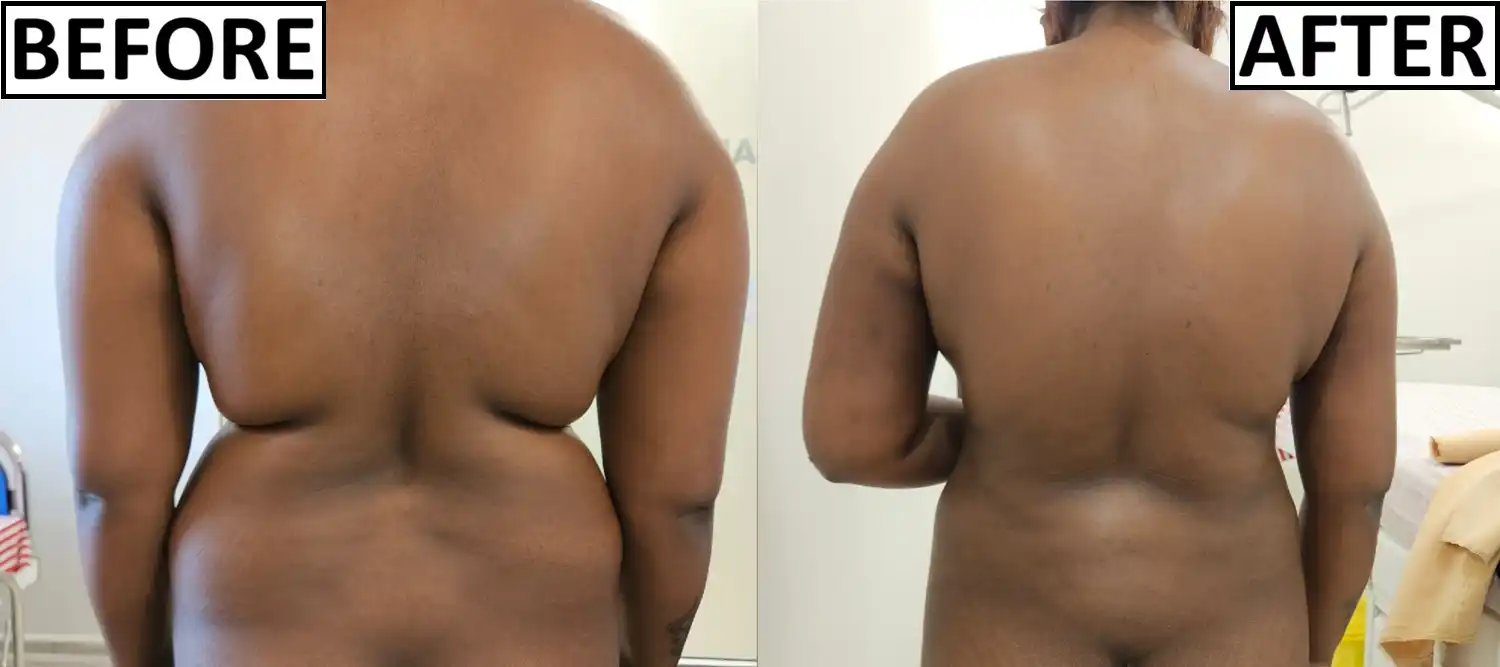
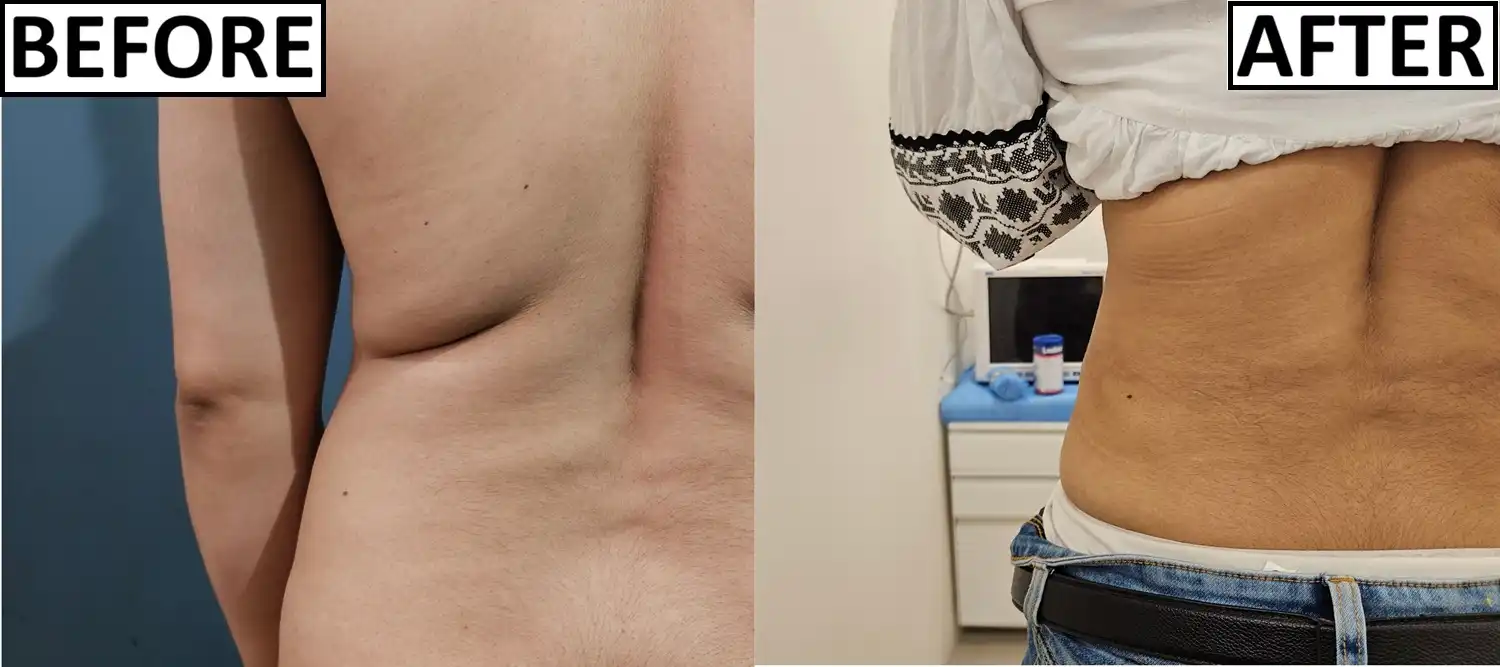
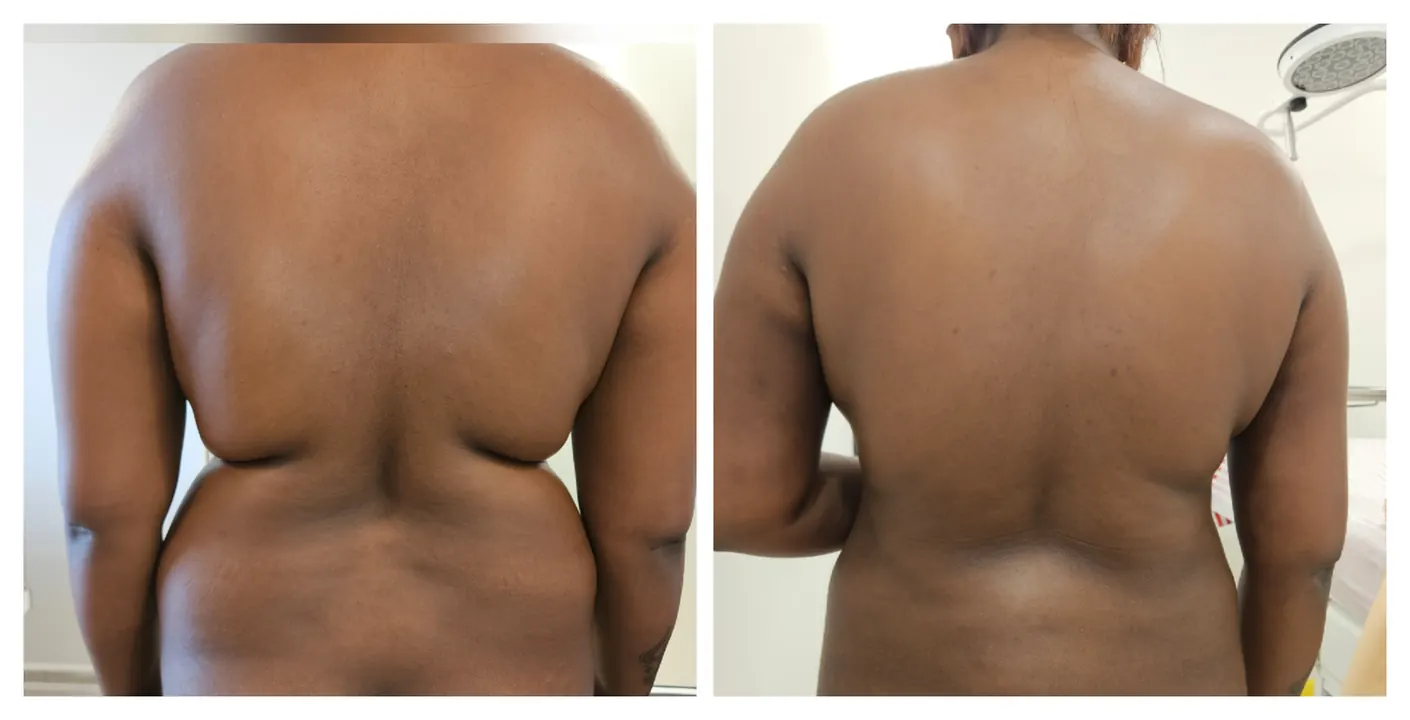 360° LiposuctionBack rolls, waist and flanks contouredView 360° liposuction
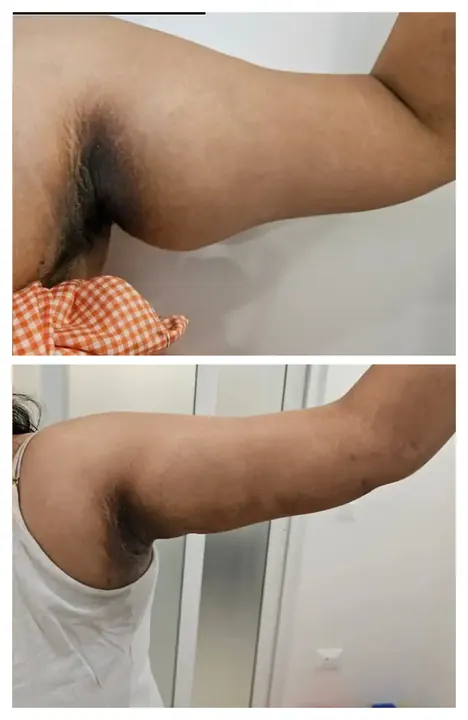 Arm LiposuctionHeavy upper arm slimmedView arm liposuction
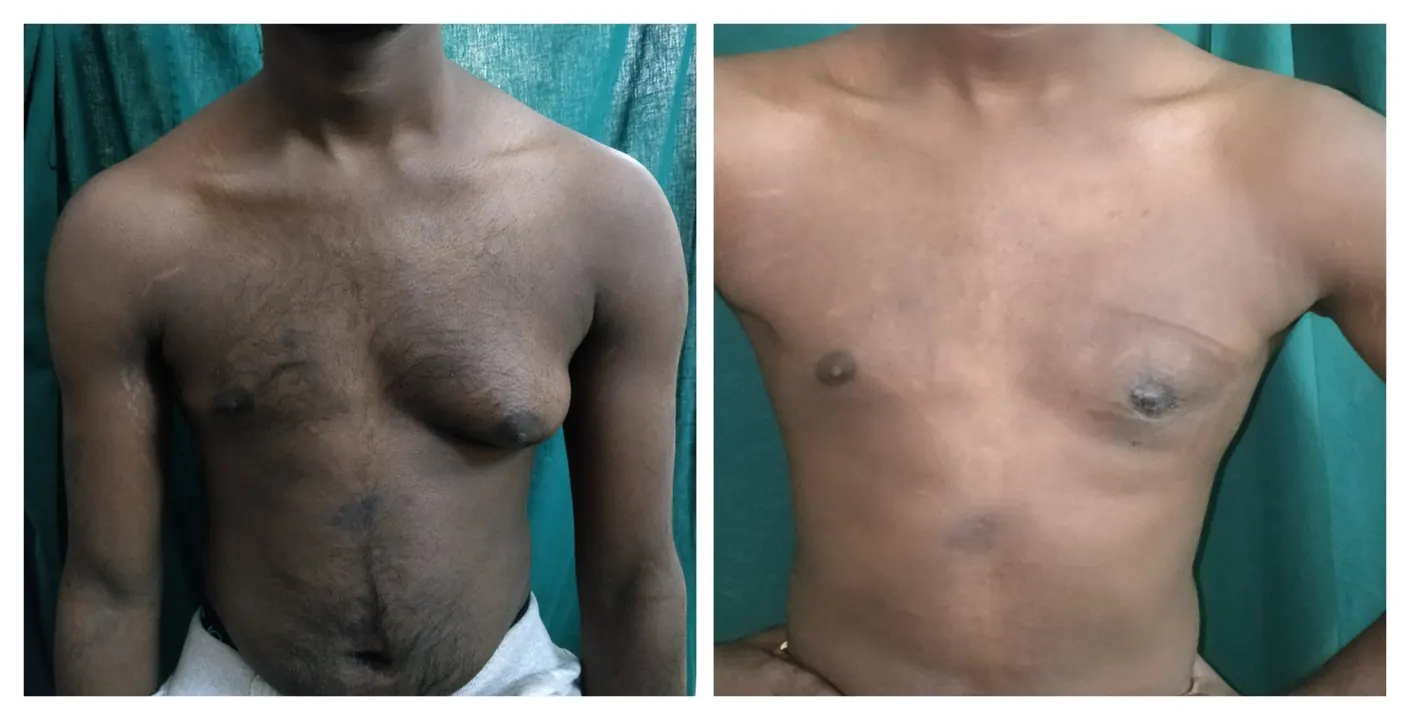 GynaecomastiaEnlarged male breast tissue removed for a flatter chestView gynaecomastia
Shared with patient consent and masked for privacy. Individual results vary; these images are illustrative, not a guarantee of outcome.
This article is general information from a practising plastic surgeon. It is not a substitute for a personal consultation: every body, and every surgical plan, is different.